Proud Member of the Rapid Response Team for:

Click Here To Learn More About How You Can Help
Or
Call 412-378-8779
Categories
- 2012
- 2013
- 2016
- 2017
- 2018
- Advertising
- Advocacy
- Amazing!
- Appellate Practice
- Apps for Lawyers and Others
- AVVO Answers
- Bankruptcy
- Blawging
- Business
- Casa San Jose
- Case Update
- Christmas!
- Civil Litigation
- Civil Rights
- Civility and Courtesy in the Practice of Law.
- Congressional Redistricting
- Constitutional Law
- Construction Law
- Consumer Protection
- Contract Law
- Coronavirus
- Courthouse Scenes
- COVID-19
- Credit Card Collection Litigation
- Criminal Law
- Cyber security
- Decision making
- Employment Law
- Encore Post
- Environmental Law
- Estates and Trusts
- Ethics
- Evidence
- Fair Housing
- Fake News
- Family Law
- Fifty Years Ago
- fracking
- Future of the Law
- Great Lawyers
- History
- Holidays
- How to . . .
- Humor and Satire
- Immigration
- insurance
- Jack Sez
- Landlord and Tenant law and litigation
- Lawyering
- Legal Education
- Legal Ethics
- Legal History
- Legal Marketing
- Legal Technology
- Legal Writing
- Life Affirmation
- Life on the Internet
- Links
- Milestones
- Mortgage Foreclosure
- News Commentary
- Oil and Gas
- On line chicanery
- On-line Security
- One Hundred Years Ago
- Oriegate
- Orphan's Court Practice
- Personal Privacy
- Personal Productivity
- Phishing
- Pittsburgh
- Pittsburgh Legal Back Talk
- Pittsburgh Legal Community
- Pokemon Litigation
- Politics and Government
- Post September 11
- Practice of Law
- Privacy
- Property Assessments
- Real Estate
- Real Estate Contracts
- Reassessment 2012
- Retweets
- Right to Reputation
- SCOTUS
- Screenshots!
- Security and Privacy
- Senior Lawyers
- Seven Foundations of Time Mastery for Attorneys
- Signs of the Times
- Solo by Choice: The Review
- Tell Us Something . . .
- Ten Years of Pittsburgh Legal Back Talk
- Tenth Anniversary
- Tenth Anniversary Year of PLBT
- The continuing American Revolution
- the Review
- trademark and service mark
- Trends in the Law
- UTPCPL
- Vocabulary Word of the Day
- Weekend Book Review
- Winners and Losers
- Words Lawyers Use
- Workers Compensation
- Zoning
Stepping Up.
Posted by Cliff Tuttle| June 13, 2009 | © 2026
Posted by Cliff Tuttle (c) 2009
The Pittsburgh Penguins demonstrated last night what we all know but frequently don’t believe. Outcomes are not preordained.
CLT
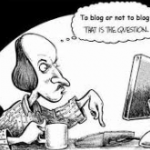
Why Blog? 10.5 Good Reasons.
Posted by Cliff Tuttle| June 11, 2009 | © 2026
Posted by Cliff Tuttle (c) 2009
Lawyers are often advised by marketing professionals to blog because it is good marketing. The AVVO blog recently announced an inexpensive and easy to use blogging vehicle for lawyers. If you have a modest marketing budget, investing in a blog will buy you more effective advertising than any other vehicle, including Google pay per click ads.
But if a lawyer never lands a single new client from blogging, the exercise is still worthwhile. Here are 10.5 reasons why:
1. Self education. In order to write a blog piece you need to read and find out what’s going on in the law and in the world. Doesn’t continuous self-education make a better lawyer?
2. Reinforcement of learning. The best way to remember newly-acquired information is to use it. The best way to really understand a concept is to explain it. Blogging forces you to do both.
3. Getting away from the old me-me-me. The essence of a law firm website is telling potential clients how great you are. That can get tiresome — with legal advertising websites rivaling the leading sleep aids for induced drowsiness. A blog looks outward at the world, not inward at the firm.
4. Practice makes perfect. If you wish to be a persuasive and polished writer, you must practice.
5. Busman’s Holiday. It is surprising how relaxing it can be after a day of toil to write something. You may not think so until you start to really get into writing your blog. Meanwhile, you are thinking and writing about work related matters.
6. Making Friends and Influencing People. Through your blog (assuming you are diligent and have good content) I guarantee that you will make the acquaintance of people worth knowing. They will consider you smart, informed and very persuasive — otherwise, they wouldn’t be reading your blog.
7. The Bully Pulpit. When you have a gripe, a beef or a strongly-held opinion, shazam! You have a forum!.
8. Developing New Expertise. All that reading and writing, scrounging for topics and keeping your ear to the ground to identify advancing trends, will cause you to develop and expand expertise on new topics. Moreover, you don’t have to tell anyone you know something about a field of the law, your blog does.
9. Developing a Portfolio. All the posts you ever wrote will be on the internet for a long time. You’ll receive comments popping up on posts written many months or even years ago — ones you’ve actually forgotten you wrote. You’ll find yourself saying to people: “Read my blog post(s) on the subject.”
10. Self fulfillment. You will feel a sense of accomplishment when you post something really good.
10.5 Strange as it may seem, you could be a force in someone else’s life. Someday, if you are lucky, someone will write to you or tell in person that you helped changed his or her life. Teachers often hear it years later from students. When you blog, you are the teacher and who knows who the student may be?
CLT
MERS Says It Will Notify Residential Mortgagors of Transfers.
Posted by Cliff Tuttle| June 10, 2009 | © 2026
Posted by Cliff Tuttle (c) 2009
Mortgage Electronic Recording Systems (MERS), the entity that keeps electronic records of assignments of mortgages, announced in a recent press release that it will notify mortgagors of residential properties of transfers of ownership, in compliance with 2009 amendments to Federal Truth In Lending requirements. It should be noted that many lawyers assert that transfer on the records of MERS, which are not public information, is not sufficient to grant standing for the assignee to commence mortgage foreclosure.
CLT
Caperton v. A T Massey: Vocabulary Word of the Day — Recusal.
Posted by Cliff Tuttle| June 10, 2009 | © 2026
Posted by Cliff Tuttle (c) 2009
There are a few law firms in this town who have probably made significant contributions to the campaigns of so many judges, that they may have trouble finding a court that will not have to entertain motions for recusal in light of the West Virginia case decided by the U S Supreme Court this week. Read about it in the excellent commentaries (2 of them to date) in the West Virginia Business Litigation Blog. You can read this excellent source anytime from the Blogroll near the bottom of the column to your right.
Good job, WVBLB!
CLT
Pittsburgh Legal Newslog: Justice Ginsberg Stays Chrysler Sale Pending Supreme Court Review.
Posted by Cliff Tuttle| June 8, 2009 | © 2026
Posted by Cliff Tuttle, (c) 2009
Justice Ruth Bader Ginsberg stayed the bankruptcy sale of Chrysler assets to enable the Supreme Court to hear appeals alleging that Treasury had engineered a run-around statutory protection for first lien creditors of bankruptcy debtors. Read the brief of the appellants.
This case promises to be of critical importance regardless of its outcome. It will affect the disposition of the GM Bankruptcy, not far behind Chrysler. It could also cause a swift erosion of first lien creditors rights.
CLT
Super Duper: “Super Lawyer” Designations are Misleading Advertising.
Posted by Cliff Tuttle| June 8, 2009 | © 2026
Posted by Cliff Tuttle (c) 2009
So, the Super Lawyers magazine came in the mail last week. The cover says: “The Top Attorneys in Pennsylvania plus Delaware.” Among the cover articles: “Nadeem Bezar grew up around doctors. Now he sues them.”
Not to pick on Nadeem — he didn’t write this stupid tabloid headline and he might even have been gravely embarrassed to see it. Or to criticize the lawyers who are named in the magazine. Among the names I recognize (relatively few in number) there are none whom I would call ordinary. In fact, the few whom I know well enough to evaluate would get my vote, assuming I had a vote.
The process of selection is interesting. Super Lawyers are nominated by other lawyers and vetted by the staff of the magazine, assigning points under a set of criteria like verdicts, settlements, scholarly publications, pro-bono work. Multiple nominations also yield multiple points, subject to controls to prevent reciprocal nominations or orchestrated mass nominations. Then the final selections are made by “blue ribbon panels” comprised of . . . the highest point-getters among the nominees. In other words, the Super Lawyers select each other.
Not surprisingly, the Super Lawyers in Pennsylvania come predominantly from Philadelphia and a handful of surrounding counties and to a lesser degree, Pittsburgh and its environs. There are very few from smaller, more remote counties. Solo and small practitioners, which comprise a large percentage of the bar, are not represented much at all. The vast majority of Super Lawyers seem to come from medium sized firms whose advertising message is that their star players are every bit as good and maybe better than their counterparts at the large law firms.
But the problem with the brand isn’t that the Super Lawyers themselves are unqualified or, as a group, unrepresentative. It is the message that the designation “Super Lawyer” implies. Yes, Super Lawyer is to lawyer as Superman is to man. In the American culture, Superman leaps tall buildings in a single bound. So what does Super Lawyer imply? “My Super Lawyer can lick your ordinary lawyer in court with one hand tied behind his back!” — thats what a typical consumer of legal services is likely to think.
The New Jersey Supreme Court’s ethics panel in its slightly famous Opinion No. 39, issued in 2006, thought so too. New Jersey prohibits its lawyers from advertising as Superlawyers or even participating in the selection process. Why? Because, the public can easily be mislead by the use of superlatives in lawyer advertising.
An example, chosen at random from many similar Super Lawyer ads on the internet, is the announcement of McDermott Will & Emery, a well-known and highly regarded Washington DC firm. This announcement incorrectly indicates that Super Lawyers constitute the top 5% of lawyers in the jurisdiction. Yet, the Super Lawyers web site says only that the number of Super Lawyers is limited to 5% of the lawyer population in that locality, not the top 5%. The MW&E announcement then modestly states that “several” of its partners had been named as Super Lawyers. Count ’em: there are eighteen, spread over more than eighteen practice areas. Moreover, two are erroneously designated as being among the top 100 lawyers in Washington. (Correction:according to Super Lawyers magazine, that statement should be revised to say that two of its partners received point ratings among the 100 highest given DC Super Lawyer nominees.)
The Super Lawyers magazine may carefully draw such distinctions, but they are immediately lost when the newly-minted Super Lawyers themselves republish the information.
The fact is, as anybody knows, that there is no way to determine the top 100 lawyers in Washington DC, Philadelphia or any other major city. But even if we could, what practical use would such information be? A lawyer only becomes super when he or she is a perfect match for the task that a client needs to have performed. This includes relevant knowledge and experience as well as an appropriate price tag. It may include other elusive qualities, such as patience, perceptive ability or even the ability to persist in the face of discouraging developments. The best lawyer for one case may be a terrible match for another. All 100 of the so-called top lawyers in Philadelphia may be woefully wrong for your case.
As Carolyn Elefant never tires of pointing out in My Shingle, lawyers who find their niche are frequently the best the the world for serving clients in their chosen specialty. Find that groove and any of us can become a real life super hero, rescuing our clients from peril.
Why Assessments Don’t Go Down
Posted by Cliff Tuttle| June 2, 2009 | © 2026
Posted by Cliff Tuttle, (c) 2009
I have recently read some speculation why the surplus of properties for sale, many of which go unsold for years, has not driven assessments downward.
There are multiple factors that create a floor for real estate prices, but the most important is the balance on the mortgage. Few sellers can afford to bring much money to a closing. If the market value is lower than the mortgage balance, the asking price usually does not fall below the payoff amount. Thus, instead of selling at the true fair market value, a property simply doesn’t sell or is taken off the market.
In desperation, a few sellers who cannot wait will try to engineer a short sale. These are hard to do because the lender will typically refuse to consent until the final number is known. This makes short sales a rare commodity, even today.
Sheriff sale bid prices are usually not considered to be indicators of fair market value. Thus, these lowball sales (hundreds of them every month) are excluded from the pool of sales that appraisers consider. Yet each of them represents a sale — one where the seller in effect agrees to sell the property for the equivalent of the mortgage debt. This is not to say that these numbers should be considered. There is no willing seller and buyer making voluntary decisions. Yet a large number of properties happen to be transferred at far below the fair market value in this fashion.
A good indicator of true fair market value is the prices foreclosure properties yield when they are resold by lenders to liquidate their investment. Unlike most owners, banks and other lenders can afford to sell a property at fair market value, even when this price has fallen far below the prior sales price or mortgage amount. Thus, a property in a bad neighborhood with no takers can eventually sell for a fraction of the prior mortgage. Yet, appraisers are likely to reject these prices as too low to reflect fair market value. Unfortunately, they are too often the best indicator of the true market value of properties in poor condition.
On the other hand, nominal sales prices have been increased across the board by the phenomenon known as “seller assist.” The seller gives the buyer a credit of several thousand dollars toward closing costs. This raises the reported sales price and thus the assessment value.
Of course, all this should not affect the base year system used in Allegheny County and other Pennsylvania counties. Or does it? The 2002 reassessment, based on actual sales data, contained the bias described above. The fact that some properties have lost value since 2002 while others gained, only makes the situation worse.
CLT
Brit High Court Answers Taxing Question: Are Pringles Potato Crisps (taxable) or Just Another Savory Snack (untaxable)?
Posted by Cliff Tuttle| June 1, 2009 | © 2026
Posted by Cliff Tuttle
New York Times, June 1, 2009.
Look for lots of TV news and blogging on this light and flaky morsel.
CLT
Landlord & Tenant: Foreclosure Update
Posted by Cliff Tuttle| June 1, 2009 | © 2026
Posted by Cliff Tuttle, (c) 2009
Under Public Law 111-022, signed by the President on May 20, 2009: In the case of any foreclosure on a federally-related mortgage loan or on any dwelling or residential property, it is reported that the tenant is entitled to remain for 90 days if there is no written lease or the entire term of a bonafide lease if there is one. More about this later.
CLT
The Moment of Truth
Posted by Cliff Tuttle| June 1, 2009 | © 2026
Posted by Cliff Tuttle. (c) 2009
In the Academy Award Winning Film, “Slumdog Millionaire”, the hero, Jamal, is being interrogated by the police. He was one question away from winning the top prize, 200 Million Rupees, in the Indian version of “Who Wants to be a Millionaire?” The nightly show ended just as the final question was about to be read. As Jamal is leaving the studio, he is arrested by the police. The show’s producers have reported him for cheating.
Why cheating? Because a slumdog like Jamal, who grew up as an orphan in the streets of Mumbai, should never be able to answer more than two or three questions. After torture does not work, Jamal explains how, through stories from his life, he happened to know the answers to question after question. It is a grim story full of horrific visions. Scenes from the quiz show cut away to scenes from Jamal’s life of some times nauseating, sometimes hair raising adventure.
The host of the show is no Regis Philbin. He is an insulting comedian in the style of Don Rickles. His jokes about Jamal are quite brutal, but along the way he appears to be giving Jamal a modicum of grudging respect.
Then comes the moment of truth. During a commercial break, host and contestant are alone in the men’s room. Jamal confesses that he does not know the answer to the next to last question. The host gives Jamal encouragement and after the host has left Jamal discovers the letter “B” written on a steamy mirror surface.
Back on the air, Jamal uses the 50-50 option. The remaining answers are B and D.
Jamal still doesn’t know the answer, but there are now only two choices. Should he trust the host or not? But even if the host is telling him the winning answer, should he accept it?
He looks deeply into the eyes of the host and makes his decision. “D”, he says. The host tries to cajole Jamal to change his answer. Jamal hangs tough. “D” turns out to be correct.
Did Jamal read the mind of the host? Or did he decide he’d rather lose the game and the money than his honor?
Could you read the deception if you had been in his place? How would you have chosen?
CLT
Welcome
CLIFF TUTTLE has been a Pennsylvania lawyer for over 45 years and (inter alia) is a real estate litigator and legal writer. The posts in this blog are intended to provide general information about legal topics of interest to lawyers and consumers with a Pittsburgh and Western Pennsylvania focus. However, this information does not constitute legal advice and there is no lawyer-client relationship created when you read this blog. You are encouraged to leave comments but be aware that posted comments can be read by others. If you wish to contact me in privacy, please use the Contact Form located immediately below this message. I will reply promptly and in strict confidence.
Recent Posts
- Sheriff Sales in the COVID-19 Era
- MORTGAGE FORECLOSURE: Cares Act creates gigantic opportunity for borrows under federally-backed and owned mortgages.
- PA Appellate Courts Schedule Arguments Using Electronic Media
- US Supreme Court holds that juries must render unanimous decisions in state criminal cases
- Signs of the Times — the future shortage of dentists.