Proud Member of the Rapid Response Team for:

Click Here To Learn More About How You Can Help
Or
Call 412-378-8779
Categories
- 2012
- 2013
- 2016
- 2017
- 2018
- Advertising
- Advocacy
- Amazing!
- Appellate Practice
- Apps for Lawyers and Others
- AVVO Answers
- Bankruptcy
- Blawging
- Business
- Casa San Jose
- Case Update
- Christmas!
- Civil Litigation
- Civil Rights
- Civility and Courtesy in the Practice of Law.
- Congressional Redistricting
- Constitutional Law
- Construction Law
- Consumer Protection
- Contract Law
- Coronavirus
- Courthouse Scenes
- COVID-19
- Credit Card Collection Litigation
- Criminal Law
- Cyber security
- Decision making
- Employment Law
- Encore Post
- Environmental Law
- Estates and Trusts
- Ethics
- Evidence
- Fair Housing
- Fake News
- Family Law
- Fifty Years Ago
- fracking
- Future of the Law
- Great Lawyers
- History
- Holidays
- How to . . .
- Humor and Satire
- Immigration
- insurance
- Jack Sez
- Landlord and Tenant law and litigation
- Lawyering
- Legal Education
- Legal Ethics
- Legal History
- Legal Marketing
- Legal Technology
- Legal Writing
- Life Affirmation
- Life on the Internet
- Links
- Milestones
- Mortgage Foreclosure
- News Commentary
- Oil and Gas
- On line chicanery
- On-line Security
- One Hundred Years Ago
- Oriegate
- Orphan's Court Practice
- Personal Privacy
- Personal Productivity
- Phishing
- Pittsburgh
- Pittsburgh Legal Back Talk
- Pittsburgh Legal Community
- Pokemon Litigation
- Politics and Government
- Post September 11
- Practice of Law
- Privacy
- Property Assessments
- Real Estate
- Real Estate Contracts
- Reassessment 2012
- Retweets
- Right to Reputation
- SCOTUS
- Screenshots!
- Security and Privacy
- Senior Lawyers
- Seven Foundations of Time Mastery for Attorneys
- Signs of the Times
- Solo by Choice: The Review
- Tell Us Something . . .
- Ten Years of Pittsburgh Legal Back Talk
- Tenth Anniversary
- Tenth Anniversary Year of PLBT
- The continuing American Revolution
- the Review
- trademark and service mark
- Trends in the Law
- UTPCPL
- Vocabulary Word of the Day
- Weekend Book Review
- Winners and Losers
- Words Lawyers Use
- Workers Compensation
- Zoning
How Do Lawyers Measure Productivity?
Posted by Cliff Tuttle| May 28, 2012 | © 2026
No. 840
 The Pittsburgh Post-Gazette reprinted an article from the Legal Intelligencer about attorneys fees. It seems that Pennsylvania law firms that participated in a certain survey increased their fees this past quarter by about 9%, which exceeds the national average of 3% by about triple. There was some speculation that the Pennsylvania firms were “catching up”. No actual dollars were mentioned, of course. But the article went on to say that despite fee increases, the law firms didn’t increase revenues. Poor law firms!
Toward the end of the article appeared a topic that caught my eye — lawyer productivity — defined in terms of the number of billing hours worked per lawyer.
Productivity, real productivity, is measured by the efficiency of production. Increased productivity in a competitive market will lead to lower costs to the consumer, not higher ones. Technology is a major factor in increasing productivity and reducing costs. So is transferring tasks to lower paid workers, like using paralegals rather than lawyers to do repetitive and well-defined tasks. But is the phenomenon described here, getting more billing time per lawyer, true productivity?
In a perverse way, yes. From the law firms point of view, when they get in an extra dollar and didn’t have to increase payroll costs to do it, the return on investment increased one dollar. But does that dollar represent a true productivity increase?
Is daily hour twelve billed by an overworked lawyer equivalent to daily hour five? Did it produce an equally creative and effective work product as the hours expended when the lawyer was fresh and rested? There is no empirical way to answer these questions, but we all know the answer. If you need to be persuaded, read “Manage Your Energy, Not Your Time”, the post appearing immediately below.
If you must measure in hours, then a task completed in fewer hours — not more — represents increased productivity. While you cannot measure lawyer productivity objectively, that doesn’t mean you know nothing. Lawyers and clients know a good job and good results when they see it and, over time, they know whether cases are being billed fairly.
Hourly fees by their nature discourage productivity, and flat fees or capped fees encourage it. The lawyer, not the client, takes the risk that unanticipated extra effort may be required to cross the finish line first. What’s wrong with that?
One last thought: a good settlement is, in many cases, better than victory. This is especially true when settlement involves voluntary payment while victory requires more lawyering to collect. If more lawyers worked for flat fees, they might just be inclined to do themselves and their clients a favor and settle more cases. What a concept!
CLT
Julie A. Fleming: “Manage Your Energy, Not Your Time.”
Posted by Cliff Tuttle| May 28, 2012 | © 2026
No. 839
 “The reason is simple,” she says. “No matter how much time you have, without sufficient energy to perform at a high level during that time, you will not be able to accomplish much.”
Anyone who must spend long hours at a computer keyboard will attest to that truth. You cannot read effectively, let alone write, while fatigued or when you are falling asleep. It is better to get some rest and start again refreshed.
“Energy management is the foundational currency of work. Without energy, time is almost meaningless” writes Attorney and Consultant Julie A. Fleming in the second edition of her book, “Seven Foundations of Time Mastery for Attorneys.” Although addressing the specific needs of lawyers, the book could profitably be read by anyone who must work creatively and productively. During the coming week, I will review each of the Seven Foundations. Managing Energy is the first.
An attorney, says Julie, must emulate an athlete. Athletes must establish a training season, a game season and an off season. They hope to hit peak performance during the game — the time when performance counts most. Training builds up to that peak. And during the off-season, the athlete decompresses while getting ready to commence the cycle again.
“Like athletes, lawyers must learn how to sustain and effectively use energy during work, and how to rest, refresh , and re-energize during specifically planned non-working times.
The lawyer-athlete must create and then nurture four sources of energy: physical, emotional, mental and spiritual or purposeful. Sleep, diet, relaxation, exercise are among the sources of physical energy. Emotional capacity is more subtle. Stress that interferes with work must be controlled. Negative emotions, especially ones that limit performance must be expelled. This can be, in times of trouble, a daunting task.
Mental capacity means the ability to concentrate upon your work. “It means being fully present with your work . . . and maintaining sustained high levels of concentration, as well as holding a realistically optimistic outlook about the outcome of your work. In addition, mental capacity generates the flexibility required to identify and examine a variety of points of view, and it permits you to switch between analytical and creative approaches to a challenge.”
Purposeful capacity “refers to the ability to bring your deepest values into your day-to-day life and to connect with the purpose of your work.” Working with a goal in mind drives and energizes your work. If you are assigned to perform tasks that seem routine or even trivial, finding a purpose can be difficult. In such times, it is often necessary to remind yourself that your client is depending upon you to attain important goals or avoid harm. If nothing else, completion of the task at hand is a goal that will enable you to move on.
Put these four factors together, Julie says, and you can create the energy necessary to fuel your peak performance.
TOMORROW: Setting Priorities and Acting Accordingly.
CLT
This Time I am Not Lying, Like I was the Other Times.
Posted by Cliff Tuttle| May 28, 2012 | © 2026
No. 838
 To tell the truth, we all know people who overuse expressions that affirm that they are not lying, at least not this time. There is a new book on the subject written by Duke Psychology Professor Dan Ariely, whose writings on application of experimental psychology to everyday problems are, honestly, legendary. A sample from the new book, “The Honest Truth About Dishonesty” was printed in the Wall Street Journal this weekend.
Ariely is the author of the 2008 classic “Predictably Irrational” It is one of the best books I have ever read, I swear to God. If you hurry, you can read it before “The Honest Truth about Dishonesty” is released on June 5. I ain’t lying.
CLT
FYI, Flashing Lights to Warn of a Speed Trap May be Protected Speech
Posted by Cliff Tuttle| May 23, 2012 | © 2026
No. 837
 In case you ever wondered, there has been at least one case involving the practice of flashing lights at people approaching a speed trap. A Florida court held that such conduct was speech protected the First Amendment. Its not precedent, but its an interesting idea if you ever find yourself in that spot.
Hat tip to Jonathan Turley at Res Ipsa Loquitur Blog.
CLT
Anger Management
Posted by Cliff Tuttle| May 23, 2012 | © 2026
No. 836
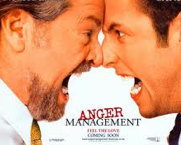 John Elash has been a hard-working and effective criminal defense lawyer for almost 40 years. So, its a little disconcerting to know that he may be remembered for an incident where he lost his cool and lost control, too. The Post-Gazette is not the only news outlet reporting that he assaulted his long-time partner’s son in an argument over a computer monitor.
We have all felt moments of intense anger (end maybe they were longer than moments) when it seemed impossible to refrain from mayhem. Such conduct is, of course, almost never justified. But, for times like this, you carry around an alternate reality in your head. Go ahead, try it out in that other world. Splash his brains and blood all over the wall. Do it two or three times. Then get the hell out of there — in both worlds.
Reference: Wikipedia on Anger Management.
CLT
Tiger Woods and the Will to Win.
Posted by Cliff Tuttle| May 22, 2012 | © 2026
No. 835
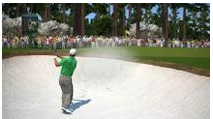 It wasn’t that long ago that Tiger Woods was considered to be the best in the world. Since his comeback, he’s still pretty good. But not the best.
To be the best, you must believe in the depths of your unconscious mind that you deserve to win. Tiger doesn’t. Not anymore. Not yet.
CLT
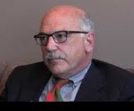
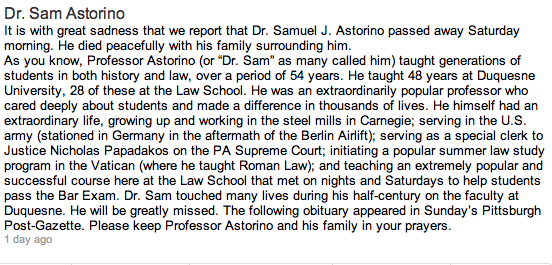
Death of Dr. Sam Astorino, Law Professor
Posted by Cliff Tuttle| May 16, 2012 | © 2026
No. 834
The following remembrance of Dr. Sam Astorino, who died recently, was posted in the Duquesne Law Alumni page of Linked in. Click here for the Post Gazette Obituary.
Arbitrary And Capricious Blog Surfaces, Albeit Briefly
Posted by Cliff Tuttle| May 15, 2012 | © 2026
No. 833
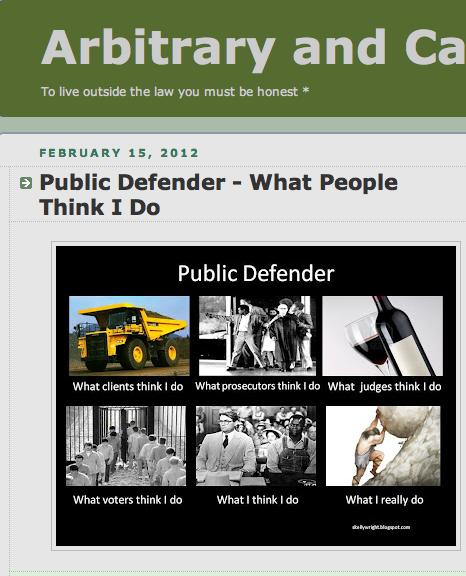
Every once in a while, I check to see how I’m doing on the AVVO list of legal blogs. Today PLBT is coming in at No. 228. No. 227 is a Public Defender Blog which has been on hiatus since 2009. However, there was one post in February 2012. Very entertaining, even if it is a little insulting to be ranked below a blog that posts only once in the past three years.
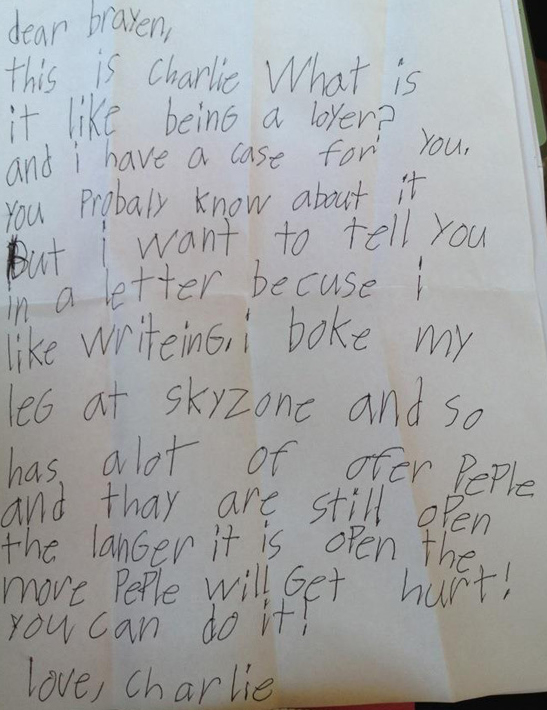
Client Correspondence
Posted by Cliff Tuttle| May 15, 2012 | © 2026
No. 832 Thanks to The Lawyerist.
The Ethics of Trial by Facebook.
Posted by Cliff Tuttle| May 8, 2012 | © 2026
No. 831
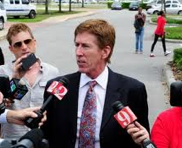 The CEB Blog (California Education of the Bar) reports that George Zimmerman’s defense team has established a Website, Facebook page and Twitter Account to address what they see as public misconceptions and present their case in the Court of Public Opinion. The website is soliciting contributions for the Defense Fund.
The CEB Blog post explores the lawyer’s ethical issues, at least in California, quite thoroughly. It turns out that there is quite a lot that can be said about a case without violating lawyer’s ethics, at least in California. If you are a lawyer thinking about doing the same thing, it is mandatory reading.
Is trial by social media a trend? Perhaps, but only in high profile cases where news media attention is already focused to the detriment of the defendant, especially the celebrity defendant. It appears that the overwhelming majority of lawyers were appalled by the publicity campaign conducted by the Jerry Sandusky defense team. I think it is fair to say that most lawyers think that pretrial commentary of that kind is not beneficial to their client. They are not comfortable with these tactics.
By the way, if you want to read the Zimmerman defense Facebook page, you are going to have to find it and friend it yourself. Sorry, I don’t do that.
CLT
« go back — keep looking »
Welcome
CLIFF TUTTLE has been a Pennsylvania lawyer for over 45 years and (inter alia) is a real estate litigator and legal writer. The posts in this blog are intended to provide general information about legal topics of interest to lawyers and consumers with a Pittsburgh and Western Pennsylvania focus. However, this information does not constitute legal advice and there is no lawyer-client relationship created when you read this blog. You are encouraged to leave comments but be aware that posted comments can be read by others. If you wish to contact me in privacy, please use the Contact Form located immediately below this message. I will reply promptly and in strict confidence.
Recent Posts
- Sheriff Sales in the COVID-19 Era
- MORTGAGE FORECLOSURE: Cares Act creates gigantic opportunity for borrows under federally-backed and owned mortgages.
- PA Appellate Courts Schedule Arguments Using Electronic Media
- US Supreme Court holds that juries must render unanimous decisions in state criminal cases
- Signs of the Times — the future shortage of dentists.