Proud Member of the Rapid Response Team for:

Click Here To Learn More About How You Can Help
Or
Call 412-378-8779
Categories
- 2012
- 2013
- 2016
- 2017
- 2018
- Advertising
- Advocacy
- Amazing!
- Appellate Practice
- Apps for Lawyers and Others
- AVVO Answers
- Bankruptcy
- Blawging
- Business
- Casa San Jose
- Case Update
- Christmas!
- Civil Litigation
- Civil Rights
- Civility and Courtesy in the Practice of Law.
- Congressional Redistricting
- Constitutional Law
- Construction Law
- Consumer Protection
- Contract Law
- Coronavirus
- Courthouse Scenes
- COVID-19
- Credit Card Collection Litigation
- Criminal Law
- Cyber security
- Decision making
- Employment Law
- Encore Post
- Environmental Law
- Estates and Trusts
- Ethics
- Evidence
- Fair Housing
- Fake News
- Family Law
- Fifty Years Ago
- fracking
- Future of the Law
- Great Lawyers
- History
- Holidays
- How to . . .
- Humor and Satire
- Immigration
- insurance
- Jack Sez
- Landlord and Tenant law and litigation
- Lawyering
- Legal Education
- Legal Ethics
- Legal History
- Legal Marketing
- Legal Technology
- Legal Writing
- Life Affirmation
- Life on the Internet
- Links
- Milestones
- Mortgage Foreclosure
- News Commentary
- Oil and Gas
- On line chicanery
- On-line Security
- One Hundred Years Ago
- Oriegate
- Orphan's Court Practice
- Personal Privacy
- Personal Productivity
- Phishing
- Pittsburgh
- Pittsburgh Legal Back Talk
- Pittsburgh Legal Community
- Pokemon Litigation
- Politics and Government
- Post September 11
- Practice of Law
- Privacy
- Property Assessments
- Real Estate
- Real Estate Contracts
- Reassessment 2012
- Retweets
- Right to Reputation
- SCOTUS
- Screenshots!
- Security and Privacy
- Senior Lawyers
- Seven Foundations of Time Mastery for Attorneys
- Signs of the Times
- Solo by Choice: The Review
- Tell Us Something . . .
- Ten Years of Pittsburgh Legal Back Talk
- Tenth Anniversary
- Tenth Anniversary Year of PLBT
- The continuing American Revolution
- the Review
- trademark and service mark
- Trends in the Law
- UTPCPL
- Vocabulary Word of the Day
- Weekend Book Review
- Winners and Losers
- Words Lawyers Use
- Workers Compensation
- Zoning
Sheriff Sales in the COVID-19 Era
Posted by Cliff Tuttle| April 30, 2020 | © 2025
No. 1,644
The Court of Common Pleas has automatically postponed all sheriff’s sales scheduled on May 4, 2020 to July 6, 2020.
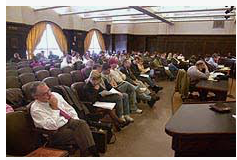 Problem is, will the spacing and mask requirements be enforced? Anyone who has ever attended a sheriff sale knows that the Gold Room is always packed. Any attempt to enforce spacing would probably reduce the number of bidders. That would be subject to attack at motions court by disappointed bidders.
Perhaps the Sheriff will initiate remote bidding using a televised network. The registered bidders could watch the proceedings and phone in their bids. Problem is, yes, that would take days. And electronic payment would have to be arranged. They take cash only on bid deposits. That would take time, too.
Don’t bet on the sheriff doing anything like that. It would cost a fortune and take a lot more time to set up than 60 days. There are contractors who could do it (they auction government surplus equipment world-wide). And the electronic auction would probably be a bonanza for lenders and even some defendants, since it would probably increase overbids to paying off creditors and perhaps other lien holders, with the surplus going to the debtor.
But don’t expect anything like this by July. Just expect more postponements.
CLT
MORTGAGE FORECLOSURE: Cares Act creates gigantic opportunity for borrows under federally-backed and owned mortgages.
Posted by Cliff Tuttle| April 23, 2020 | © 2025
No. 1,643
The National Law Review reports that the Cares Act, which contained a variety of relief measures for persons suffering from COVID-19 shutdown, contains provisions permitting borrowers under federally backed mortgages to request relief from their mortgage servicer.
Borrowers should contact their servicer to determine whether their mortgage is qualified. Forbearance shall be granted for 180 days with an extension for an additional 180 days, upon request.
CLT
PA Appellate Courts Schedule Arguments Using Electronic Media
Posted by Cliff Tuttle| April 22, 2020 | © 2025
No. 1,642
PA appellate courts have announced arguments to be conducted by electronic media, reports Howard Bashman in his blog “How Appealing.” Here is what he stated on April 22, including links:
The state appellate courts of Pennsylvania have announced plans for the video or telephonic oral argument of appeals: The Supreme Court of Pennsylvania this afternoon posted this tweet announcing its plans to conduct its May 2020 oral argument session by videoconference.
Yesterday, the Superior Court of Pennsylvania issued an order announcing that on April 30, 2020 the court will begin hearing oral arguments by telephone.
And on Monday, the Commonwealth Court of Pennsylvania issued an announcementstating that its “May 11–15, 2020 Oral Argument Session [will] Be Conducted Remotely Using Advanced Video Communication Technology” — which sounds quite fancy!
CLT
US Supreme Court holds that juries must render unanimous decisions in state criminal cases
Posted by Cliff Tuttle| April 22, 2020 | © 2025
No. 1,641
RAMOS v LOUISIANA https://www.law.cornell.edu/supremecourt/text/18-5924
The US Supreme Court reversed precedent that had approved the long-standing practice in the states of Louisiana and Oregon of criminal convictions with a 10 – 2 verdict. The Court held that the Sixth Amendment required this result by the term “trial by an impartial jury” as understood by the framers. Pennsylvania is among the 48 states that require unanimity, so it has no impact on our practice.
However, three concurrences and a dissent were filed, indicating a diversity of opinions on how this conclusion should be reached.
CLT
Signs of the Times — the future shortage of dentists.
Posted by Cliff Tuttle| April 21, 2020 | © 2025
No. 1,640
 I talked to my dentist yesterday. Due to Chronovirus, he hasn’t seen a patient in five weeks. He has a book full of appointments, which he keeps moving forward on a daily basis. But he freely admits that he doesn’t know when he will eventually be able to resume the schedule. The only kind of dentistry permitted at the moment is in an emergency. That means the patient is in serious pain.
Most of us are hopeful we will be able to go back to work in a few weeks, subject to a few well-known spacing rules. But dentistry isn’t one of those jobs. The dentist and the patient are too close for comfort. As others start to go back to work, some dentists may close their practices and do something else, creating a future shortage. The dental school class of 2020 and the succeeding years may be first. After all, they may have the best chance to change professions. Maybe some are already becoming COVID-19 lab technicians and testers.
CLT
Its a New World. Be Brave.
Posted by Cliff Tuttle| April 20, 2020 | © 2025
No. 1,639
Its been awhile since my last post. The world has changed and not for the better. We are quarantined in our homes, waiting for COVID-19 to pass away. Today is the first day that masks are required in Pennsylvania for those who venture out to “necessary businesses.” On TV news broadcasts, I see many people covering the mouth but not the nose. But none have apparently misunderstood like the person below. Yes, there is a hole in the middle of the disk/mask.
CLT

The Quintessential Trivia Question
Posted by Cliff Tuttle| August 15, 2019 | © 2025
No. 1,638

Back in the day, when our neighbors used to get together under the stars to play Trivia on a summer night, I remember my neighbor complaining that too many Trivia questions (at least in the early editions) contained answers that weren’t trivial, but the product of a liberal education. For example, who wrote the Lives of Famous Greeks and Romans? The quintessential Trivia Question was, according to her, the name of the farmer who rented the land where Woodstock was held.
It was fifty years ago today. Do you remember? Or did you ever know?
Max Yasgur.
I actually was present when that card was turned, several summers later. I had already forgotten the answer by then. And I forgot it again until Time Magazine reminded me.
But I’ll never forget the name of the great biographer of Alexander, Caesar, Pompey and so many more. The immortal Plutarch. That’s definitely not trivial.
CLT
What is the Fastest Growing Type of Household Debt Today?
Posted by Cliff Tuttle| August 12, 2019 | © 2025
No. 1,637
According to J P Morgan, as reported in DS News, a electronic newsletter for the banking industry, the fastest growing category of household debt is CLICK HERE.
Hint: Repayment problems may be the root of the next financial crisis.
CLT
REAL, AS OPPOSED TO FAKE, ID?
Posted by Cliff Tuttle| July 27, 2019 | © 2025
No. 1,636
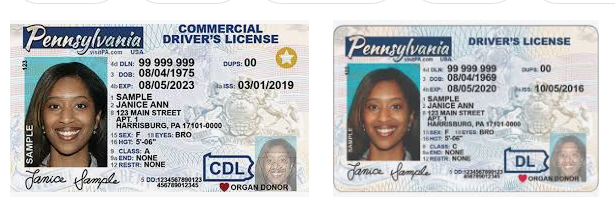
We obtained real ID’s this month. PennDOT says that they are “optional” but one day, sooner than you think, they are going to be mandatory. Unless you have a passport, they are or will be required in all states for domestic air travel. Also, as a lawyer, I’ll need them to enter any federal building or military base. I visited ICE last week and proudly presented my brand new Real ID.
The PA Real ID’s are almost identical to a standard driver’s license, except that they have a white star inside a gold circle in the upper right hand corner. In case there is any opportunity for confusion, the regular PA license states: “NOT FOR REAL ID PURPOSES.”
Yes, it is a hassle to put together the required evidence. If you lost your Social Security Card, you must order a new one. They helped you lose the last one by warning you not to place it in your wallet. You can’t order it on line, even if you are currently drawing benefits. You must go to the SSA office, take a number and wait. It will arrive in the mail in seven to ten days.
In the case of a married woman who didn’t retain her surname, she must also get a certified copy of her marriage certificate. Discrimination against women — particularly married women? A small price to pay for a safe flight, right?
But the price may not be as small as you think. If you watch carefully during the processing, you can observe the documents you just submitted are being copied before the clerk returns them to you. That means that PennDOT has a file on you that includes, in addition to current information, a copy of your birth certificate. The marriage license application also contains information regarding your parents and your spouses’ parents. And don’t forget, your photo is on the license and in their database.
According to a recent article in the Washington Post, the State Police, FBI and ICE have routine access to these records without a warrant or your consent. Your photograph is available for download into a facial recognition database. Even though you have never been convicted, or even charged, law enforcement has a pretty good starter file on you, available for the taking at the speed of the internet.
But that’s only the beginning. They probably have, or can quickly get, your fingerprints. They can, if they wish, look at your credit report with a few keystrokes. And there is probably a gold mine of other information available on social media.
There is no point in fretting over what has already happened. Moreover, I am told that the only people who care these days about loss of personal privacy are oldsters and illegal aliens. Those who grew up in the information age have accepted it as inevitable. Perhaps. But there are still a few remnants of our private lives known only to ourselves. It is worth reflecting upon ways we can keep these few remaining nuggets out of our government’s database.
Is it still necessary in 2019 for a federal employee to manually look up the PennDOT file and download it? If so, we all know that the technology exists for a machine to access it, when needed, without human intervention. And if it can be done, it will. Perhaps ICE was already checking my Real ID identity information against their list of illegals. I’ll never know unless/until they clap on the cuffs. (Mistakes happen all the time. A US Senator has the same name as someone on the no-fly list.)
Moreover, security guards and police are not the only ones who may ask you to produce identification. Think of all the civilians who regularly want to examine your license. These range from the merchant who accepts your personal check to the closing officer who refinances your home. How long to you think it will take before all of them will demand a Real Id? My guess, one year.
The time is coming –if it hasn’t already — when a guard at the Federal Building will have the dossier on me during the twenty seconds it takes to walk through the magnetic sensor. A computer will review it, of course, since humans can’t read that fast. A silent alarm then will go off and I will be politely asked to step out of line. I will not protest that I will be late for court. That would only make the situation worse.
CLT
Ten Things They Won’t Tell You Before You Enroll in Law School.
Posted by Cliff Tuttle| July 22, 2019 | © 2025
No. 1,635
DEDICATED TO MY COLLEAGUE AND FELLOW BLOGGER, ADRIAN BARON, ESQ.,THE NUTMEG LAWYER. WHO HAS EXPLAINED THE PRINCIPLES SET FORTH BELOW IN DEPTH.
- You probably won’t know for sure that you have chosen the wrong profession until you have tried and failed.
- Get ready for a lifetime of compromise, populated by second, third and fourth choices.
- Unless you are very lucky or very smart, get ready for a long climb out of a deep, deep financial hole.
- Get ready to be beaten up and humiliated by bullies, even on good days.
- If you are an in-house counsel, get ready to risk losing your only client and having to start all over again.
- Get ready to roll the dice on long shot risks because you don’t have a better choice.
- Get ready to spend a lot of time with people you really hate.
- As you climb the ladder to the top, get ready to be outsmarted by some of the people who are already there.
- Get ready to discover that you have fallen into multiple bad habits like alcoholism, addiction, wasting time and picking fights with your spouse.
- Get ready for the morning when you just don’t feel like getting out of bed anymore.
As my Tax Prof in Law school used to say: “Tough? Sure its tough!” And why do you think there are so few lawyers who have been canonized?
Lawyering isn’t for everybody. You must be resourceful. You must be persistent. You must be a survivor. The dilemma is that you probably don’t know yourself that well at 22.
But if doing the things lawyers do is so exciting that you cannot stay away, it just might be for you.
When I decided to hold my nose and take the plunge, exactly 50 years ago this month, I asked myself one question over and over:
“Fifty years from now, will I regret that I could have been a lawyer?”
CLT
Welcome
CLIFF TUTTLE has been a Pennsylvania lawyer for over 45 years and (inter alia) is a real estate litigator and legal writer. The posts in this blog are intended to provide general information about legal topics of interest to lawyers and consumers with a Pittsburgh and Western Pennsylvania focus. However, this information does not constitute legal advice and there is no lawyer-client relationship created when you read this blog. You are encouraged to leave comments but be aware that posted comments can be read by others. If you wish to contact me in privacy, please use the Contact Form located immediately below this message. I will reply promptly and in strict confidence.
Recent Posts
- Sheriff Sales in the COVID-19 Era
- MORTGAGE FORECLOSURE: Cares Act creates gigantic opportunity for borrows under federally-backed and owned mortgages.
- PA Appellate Courts Schedule Arguments Using Electronic Media
- US Supreme Court holds that juries must render unanimous decisions in state criminal cases
- Signs of the Times — the future shortage of dentists.