Proud Member of the Rapid Response Team for:

Click Here To Learn More About How You Can Help
Or
Call 412-378-8779
Categories
- 2012
- 2013
- 2016
- 2017
- 2018
- Advertising
- Advocacy
- Amazing!
- Appellate Practice
- Apps for Lawyers and Others
- AVVO Answers
- Bankruptcy
- Blawging
- Business
- Casa San Jose
- Case Update
- Christmas!
- Civil Litigation
- Civil Rights
- Civility and Courtesy in the Practice of Law.
- Congressional Redistricting
- Constitutional Law
- Construction Law
- Consumer Protection
- Contract Law
- Coronavirus
- Courthouse Scenes
- COVID-19
- Credit Card Collection Litigation
- Criminal Law
- Cyber security
- Decision making
- Employment Law
- Encore Post
- Environmental Law
- Estates and Trusts
- Ethics
- Evidence
- Fair Housing
- Fake News
- Family Law
- Fifty Years Ago
- fracking
- Future of the Law
- Great Lawyers
- History
- Holidays
- How to . . .
- Humor and Satire
- Immigration
- insurance
- Jack Sez
- Landlord and Tenant law and litigation
- Lawyering
- Legal Education
- Legal Ethics
- Legal History
- Legal Marketing
- Legal Technology
- Legal Writing
- Life Affirmation
- Life on the Internet
- Links
- Milestones
- Mortgage Foreclosure
- News Commentary
- Oil and Gas
- On line chicanery
- On-line Security
- One Hundred Years Ago
- Oriegate
- Orphan's Court Practice
- Personal Privacy
- Personal Productivity
- Phishing
- Pittsburgh
- Pittsburgh Legal Back Talk
- Pittsburgh Legal Community
- Pokemon Litigation
- Politics and Government
- Post September 11
- Practice of Law
- Privacy
- Property Assessments
- Real Estate
- Real Estate Contracts
- Reassessment 2012
- Retweets
- Right to Reputation
- SCOTUS
- Screenshots!
- Security and Privacy
- Senior Lawyers
- Seven Foundations of Time Mastery for Attorneys
- Signs of the Times
- Solo by Choice: The Review
- Tell Us Something . . .
- Ten Years of Pittsburgh Legal Back Talk
- Tenth Anniversary
- Tenth Anniversary Year of PLBT
- The continuing American Revolution
- the Review
- trademark and service mark
- Trends in the Law
- UTPCPL
- Vocabulary Word of the Day
- Weekend Book Review
- Winners and Losers
- Words Lawyers Use
- Workers Compensation
- Zoning
Garland Predicts Roethlisberger Will not be Charged. How Could that Happen? Here’s How.
Posted by Cliff Tuttle| March 10, 2010 | © 2026
Consider the following excerpt from the Roethlisberger investigation coverage Pittsburgh Tribune Review:
“In an exclusive interview with the Tribune-Review, however, Roethlisberger’s newly hired attorney — prominent Atlanta criminal defense lawyer Edward T.M. Garland — rushed to insist that his client ‘is completely innocent of any crime.’
‘The truth of events will cause this investigation to end without a charge,’ said Garland.”
Mr. Garland, in case you hadn’t noticed, not only stated that his client was completely innocent of any crime, but predicts that at the end of the investigation his client will not even be charged with a crime.
Given what we know so far, how could this be possible?
The crime is alleged to have taken place in a dark location without security cameras. However, there were security cameras in other locations. In order for Roethlisberger to have committed the crime, both he and the victim would have to be absent from the view of the security cameras at the same time for a period of time long enough for the event to occur.
Of course, there were many witnesses present during that evening, including the victim’s friends, Roethlisberger’s entourage and other patrons of the bar. All that evidence can be pieced together to establish whether or not Roethlisberger and the victim were absent from the group at the same time. And, of course, the victim would have probably exited the bar shortly after the crime is alleged to have taken place and not be present on security tapes from that point onward. It is not too hard to imagine how film and eyewitness testimony could be combined to verify or disprove numerous details of the stories told by both the victim and the accused. If Roethlisburger was continuously on camera or in the company of many witnesses during critical times when the assault could have been committed, the investigators could well conclude that he was not the perpetrator of the crime.
Press accounts have reported that the victim was crying for a long period and concluded that this makes the allegations against Roethlisberger highly credible. The victim was well-known and respected in the student community as a person who would not seek public attention. But that does not rule out the possibility that her account of a sexual assault that actually happened was only partly true. The possibility has not been excluded that someone else committed the sexual assault.
If such inconsistencies in the evidence come to light, Garland’s prediction, that Roethlisberger will not be charged with any criminal act, could be borne out.
Please bear in mind that the forgoing is only a speculation. It is just like the theories constructed by people who, based on the fragmentary information available, have already decided his guilt. The outcome of the investigation, and perhaps the trial, will be determined by evidence not presently available to you and me.
Be patient. Think of it as a spellbinding mystery story, a real page turner, still in the early chapters, at a time when most of the clues have not been revealed.
CLT
BankAmerica Takes Possession of Wrong House and Parrot.
Posted by Cliff Tuttle| March 9, 2010 | © 2026
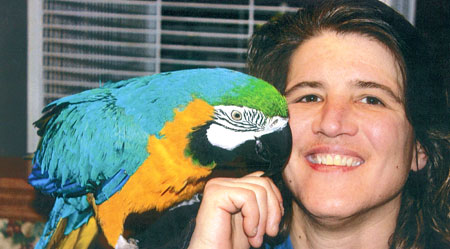
The Pittsburgh Tribune Review reports that a contractor for BankAmerica entered a house that it thought it had acquired through a sheriff sale, removing the personal property, including the owner’s parrot.
The Complaint asserts numerous causes of action. However, the case is a slam dunk and the only issues is the amount of damages. After a mortgage foreclosure (which hadn’t happened) and sheriff sale, if the former owner doesn’t remove, the plaintiff must file a new suit to gain possession and obtain a judgment. Then it must obtain a writ of possession, deliver it to the sheriff and wait for the date that the sheriff schedules for eviction.
The only defense, if you can call it one, is that BA made an honest mistake. Unfortunately, no matter how you slice it, one or more of the defendants (essentially BA and its contractors) was negligent.
So BA is going to pay. You can take that to the bank.
CLT
Book Review: “Flip It”
Posted by Cliff Tuttle| March 9, 2010 | © 2026
 Once there was a young blind woman who was very unhappy with her life. She complained continuously and nobody liked her very much. Nobody, that is, except her boyfriend, who was deeply in love. He begged her to marry and at length she told him she would marry him after an organ donor was found and her sight was restored.
In time, an anonymous donor was found and the transplant took place. When the bandages were unwound and the young woman began to see, she had a rude shock. Her boyfriend’s eyes were shut. She had never considered the possibility that he might be blind.
“I can’t marry you,” she told him. “I would never be able to look at your closed eyes for the rest of my life. It would remind me how unhappy I was when I was blind.” So the young man went away in sadness.
About a week later, she received a letter from her ex-boyfriend. “Take good care of your eyes, ” it said. “They used to belong to me.”
This story appears near the end of a short book entitled “Flip It.”. The author, Michael Heppell, asked readers: how could this dilemma have been resolved? He doesn’t give the answer, but I suspect that the most common suggestion he received was that the young man donate one eye. I think that is an unsatisfactory answer. More about that at the end of this book review.
“Flip It” is a book about the way you and I think and how to change it. When the way we think gets in the way of solving a problem, reaching a goal or even happiness itself, there is a way to change the outcome by changing the way we think. Its not that hard — just “flip it.”
Instead of asking, “why does this always happen to me?”, ask:
– How did this happen?
– How can I get back on track quickly?
– How can I avoid having it happen again?
– What can I learn from this experience?
The word “why” is a “dis-empowering” word. It implies that others are doing unto you and there is not much that you can do for yourself. It leads to answers that don’t change the dilemma.
The word “how”, on the other hand, is an “empowering” word. It acts as a key to change.
Michael Heppell suggests that a change of perspective — flipping it — changes the mind set, changes the perceived available options, changes the outcome. If you tell yourself that you are too tired or hopelessly out of time, chances are you will let yourself off the hook on your resolution to exercise. These are common excuses for inaction. But if you “flip it” and say that you could use more energy or need to find some time, possibilities start to become evident.
While “flipping it” is a mental exercise useful to anyone, it is particularly beneficial to a lawyer. When a client comes to a lawyer, he usually brings along a big problem that must be addressed immediately. Often the client thinks he is in a box — trapped with no apparent (to the client) way out.
Nevertheless, a creative lawyer may be able to flip the issue on which the case turns from a loser to a winner. Sometimes this involves observing seemingly innocent facts and getting them on the record, to point out their significance later, after the record is closed.
Heppell applies the flip it technique to a wide variety of life situations in the book. However, the challenge is always the same. A mind set must be overcome by flipping limiting ideas and assumptions on their head and attacking the problem from the new perspective of the rear or the flank or perhaps even the top or bottom.
So now lets return to the formerly blind girl and her newly blind lover.
If you suggest that he should have given her only one eye, I have several objections to the efficacy of that solution. By the time the dilemma has been presented to us, the donation had already been made. Moreover, seeing her boyfriend’s one blind eye would presumably still have reminded her of her former blindness.
The real problem was that she was still hung up on blindness as a source of unhappiness. Moreover, she was incapable of viewing the circumstance from any perspective but her own. Even after gaining sight, the image of her husband-to-be without eyes brought the old feelings back. Did she ask herself “why do these things happen to me?” Probably. Stuck in a rut.
This is a mental problem and can only be cured by a change of mind. The solution is to confront this mental roadblock with a mind flip. So you ask: “How could that mental change be effected?” Eureka! At last we’re asking the right question!
The answer is, he already did it.
When she learned that he donated his own eyes, she should have suddenly realized that he loved her so much, wanted her to be happy so much, wanted to marry her so much, that he paid an incredible price to give her the gift she most desired in life. This stunning information should have created a mind flip of gigantic proportions. Suddenly, his closed eyelids would no longer be a reminder of her old unhappiness, but would take on the new meaning of his deep and selfless love. Now, when she gazed upon her blind husband, she would be filled with happiness and gratitude.
But then again, maybe not. Maybe the feelings of self pity were so strong and deeply ingrained that she could never flip them to gratitude and happiness. And if that turns out to be the case, it is just too bad.
But at least he found out before making a lifetime commitment what his bride-to-be was truly like. If she is so flawed that she could not find happiness in such a gift, he is almost certainly better off without her. At least, he still has a chance to find someone who can love and cherish him for who he is and perhaps he can find the happiness which would have been absent in a marriage to his former girlfriend.
I recommend that you try “Flip It” as an audiobook, read by the author. Then go forth and flip some of your most cherished and useless beliefs.
CLT
Roethlisberger Media Coverage: A Refresher on the Presumption of Innocence.
Posted by Cliff Tuttle| March 7, 2010 | © 2026
 As yet another high profile case gets big time media attention, it is necessary for us to remind ourselves that news coverage is not a trial and news reports are not evidence.
Recently, the story of an accusation of sexual assault at a nightclub in a Georgia college town hit the news before there was any substantive news to hit. The fact that one of the participants in the events of that evening was Ben Roethlisberger set off big time news coverage, despite the fact that no official accusation has been made by the police. No one has been arrested and no one has been charged.
A classic illustration of the reason behind the principle that accused persons must be presumed innocent until a fair trial has been conducted was the premature punishment of members of the Duke University soccer team by the University administration and unofficially by practically the entire community. The University administration couldn’t wait for a judicial determination to run its course and took hasty action without due process. Eventually, the prosecution case collapsed under its own weight. The prosecutor himself was eventually disbarred for falsifying evidence. We should always bear in mind that such things can and do happen. When they do, lives can be irreparably harmed and even destroyed.
News stories, even when carefully written are not evidence. The refusal of defense counsel to air his or her theory of the case in the press means nothing, except that the proper time and place is at trial. But, in case we have forgotten, the defense doesn’t have to say a thing, not even to the judge and jury. The prosecution must prove its case with probative and relevant evidence beyond a reasonable doubt.
Beyond a reasonable doubt: what does that mean? It means that, after hearing all of the admissible evidence, the finder of fact must find the accused not guilty if there is room for reasonable doubt. The accused must be given the “benefit of the doubt”, provided that the doubt is reasonable.
The human mind automatically seeks to make sense out of the perceptions referred by the senses. Suspending judgment requires us to consciously hold this automatic tendency at bay. This is a mental discipline worth cultivating. It enables us to take a more considered view of other matters, matters within our personal sphere of influence, that can easily be misjudged before all of the facts are available.
In this media-driven world, there is plenty of opportunity to practice this skill.
Friends Don’t Let Friends . . .
Posted by Cliff Tuttle| March 6, 2010 | © 2026
 In Superfreakonomics the authors made the case, based upon statistics for accidents per mile, that it was more dangerous to walk home than drive home when drunk. And so, they ripped off a piece of Americana with the slogan: “Friends don’t let friends walk drunk.”
So, Dubner relates, the ad exec who coined this memorable phrase introduced herself to him recently. He also found a legal ad from a DUI lawyer who may receive a cease and desist letter soon. Is there a servicemark infringement case here? Decide for yourself.
CLT
Run, Baby, Run!
Posted by Cliff Tuttle| March 6, 2010 | © 2026
 The Solo Attorney Practitioner’s Forum has been having a long discussion (just passed 110 comments) on the subject of “when should you RUN from a potential case?”
The commenters have suggested avoiding clients who:
– Have had multiple lawyers on the same case;
– Badmouth prior lawyers;
– Arrive at the first interview with a shopping bag full of paper;
– Forget to bring their checkbook when told they will have to pay a consultation fee or retainer;
– Don’t tell you about harmful evidence until you have entered an appearance;
– Give you a bad feeling from the beginning;
– Tell you that this is a “slam-dunk” case;
– Are relatives;
– Appear shortly before the statute of limitations expires;
* Argue about fees;
– Think that the judge and former attorney have been bought off.
And that is only the beginning. I wonder what clients are saying about when to run from a lawyer.
CLT
Electronic Filing with the Pennsylvania Corporations Bureau.
Posted by Cliff Tuttle| March 4, 2010 | © 2026
 If you need to file documents with the Pennsylvania Corporations Bureau from time to time, you may wish to know that it is possible to file them electronically. This can be accomplished by following the procedure set forth below. The first time you use the system, however, it will require extra time and effort. If you wish to locate this post at some future date when you need this information, just search the site for “electronic filing” or “PA Corporations Bureau” or a similar ket word and it should come up.
Suppose you wish to file a corporate registration document and you have gone to the Department of State website, clicked to the Corporations Bureau page and clicked on “Forms.” You have located the forms you want, filled them out on line (they can’t be saved) and printed them.
Before you leave the forms page, scroll down to Miscellaneous Forms and click on “Electronic Filing Signature Page”. You will need to fill it out on line and print it out for signature. When signed, scan it. Then hold on to it until you have completed the process set forth below.
Now you are ready to go to the electronic filing website at “Pennsylvania Open for Business.” Click on “Online Business Registration” However, before you can proceed to the interview, you will need to obtain a user name and password. The password is a little tricky in that it requires several different types of characters.You will be looking for the button marked OBRI. It actually appears on two successive pages, so you must click it on both pages. It will conduct you into an interview which will contain all of the information required on the paper forms and more. Make sure you have collected names, business and home addresses, phone numbers, social security numbers. The Tax ID number, which you may not have received yet, is optional.
However, before you can proceed to the online interview, you will need to obtain a user name and password. The password is a little tricky in that it requires several different types of characters.
During the online interview, you will also have the opportunity to register with the Departments of Revenue and Labor and Industry. Just follow the prompts to the end of the form.
Finally, the Corporations Bureau will collect the filing fee online. Have your credit card ready.
You will then receive a confirmation of the filing by email.
To complete the process, fax the Signature Page and the other documents you wish to file to 717-705-0927.
The Open for Business website is able to be used for a large number of other filings with Pennsylvania State agencies. To see what they are, explore the forms section of the website.
CLT
In Case Your Wallet is Lost or Stolen.
Posted by Cliff Tuttle| March 4, 2010 | © 2026
Here is your to-do list to protect yourself from identity theft:
 Scan everything in your wallet (front and back) and label the file so that you can find it. Review and update the information periodically. The most effective way for a consumer to protect against unauthorized information being used to open credit cards is to institute a security freeze. Pennsylvania law requires the three credit reporting agencies (Trans Union, Experian and Equifax) to freeze access to your credit card files if you give them written instructions and pay a $10.00 fee. This means that even if a potential identity thief has your personal information, he can’t use it to obtain a credit card because the card issuer won’t be able to check your credit unless you “un-freeze” the account. If you later want to buy a car or a house, you can remove the freeze and then reinstitute it when you are finished.
However, if you didn’t do that, for whatever reason, cancel the cards and contact the three credit reporting agencies immediately after discovering that your wallet is missing and request a fraud alert. Here are the numbers:
Equifax: 800-525-6285
Experian: 888-397-3742
Trans Union 800-680-7289
In addition, the Social Security Administration has a fraud reporting line at 800-269-0271.
If you lose the numbers, you can always dial up this blog and use the search box. The words “identity theft” will get you to this article. So will the name of any of the three credit reporting agencies. Remember:speed is of the essence. The identity thief will be racing against you.
CLT
Features of This Blog.
Posted by Cliff Tuttle| March 2, 2010 | © 2026
 The “new look” of Pittsburgh Legal Back Talk is more than just looks. We have added some great new features that should make the blog more useful. A contact form has been installed on the right sidebar . Any reader can contact me privately via this form.
You can also research the site in several ways. Just below the contact box is a line that says “Subscribe to our feed.” If you click the RSS symbol and fill in the information requested, you will begin to get our our posts regularly via email.
Just below the RSS Feed button is a box to search this site by key words. Try it. It works.
You can also search by category by clicking any of the topics on the left sidebar. Thus, if you want to catch up on the prior posts on mortgage foreclosure, click on that category and you will get them in reverse order of publication.
The same is true with the categories and tags at the end of each article. Click a tag and you can read any other articles that contain the tag. We just passed 400 posts, so there is a lot of content to search with more to come.
And, of course, I’ve started adding pictures.
CLT
Pittsburgh Legal Newslog:Obama Floats Trial Balloon to Stay All Residential Foreclosures Pending HAMP Modification Review.
Posted by Cliff Tuttle| March 1, 2010 | © 2026
March 1, 2009 DSNews.com
Under this proposal, all residential mortgages in default would be screened to determine whether they could be modified under HAMP guidelines before foreclosure would be permitted to proceed.
CLT
Welcome
CLIFF TUTTLE has been a Pennsylvania lawyer for over 45 years and (inter alia) is a real estate litigator and legal writer. The posts in this blog are intended to provide general information about legal topics of interest to lawyers and consumers with a Pittsburgh and Western Pennsylvania focus. However, this information does not constitute legal advice and there is no lawyer-client relationship created when you read this blog. You are encouraged to leave comments but be aware that posted comments can be read by others. If you wish to contact me in privacy, please use the Contact Form located immediately below this message. I will reply promptly and in strict confidence.
Recent Posts
- Sheriff Sales in the COVID-19 Era
- MORTGAGE FORECLOSURE: Cares Act creates gigantic opportunity for borrows under federally-backed and owned mortgages.
- PA Appellate Courts Schedule Arguments Using Electronic Media
- US Supreme Court holds that juries must render unanimous decisions in state criminal cases
- Signs of the Times — the future shortage of dentists.