Proud Member of the Rapid Response Team for:

Click Here To Learn More About How You Can Help
Or
Call 412-378-8779
Categories
- 2012
- 2013
- 2016
- 2017
- 2018
- Advertising
- Advocacy
- Amazing!
- Appellate Practice
- Apps for Lawyers and Others
- AVVO Answers
- Bankruptcy
- Blawging
- Business
- Casa San Jose
- Case Update
- Christmas!
- Civil Litigation
- Civil Rights
- Civility and Courtesy in the Practice of Law.
- Congressional Redistricting
- Constitutional Law
- Construction Law
- Consumer Protection
- Contract Law
- Coronavirus
- Courthouse Scenes
- COVID-19
- Credit Card Collection Litigation
- Criminal Law
- Cyber security
- Decision making
- Employment Law
- Encore Post
- Environmental Law
- Estates and Trusts
- Ethics
- Evidence
- Fair Housing
- Fake News
- Family Law
- Fifty Years Ago
- fracking
- Future of the Law
- Great Lawyers
- History
- Holidays
- How to . . .
- Humor and Satire
- Immigration
- insurance
- Jack Sez
- Landlord and Tenant law and litigation
- Lawyering
- Legal Education
- Legal Ethics
- Legal History
- Legal Marketing
- Legal Technology
- Legal Writing
- Life Affirmation
- Life on the Internet
- Links
- Milestones
- Mortgage Foreclosure
- News Commentary
- Oil and Gas
- On line chicanery
- On-line Security
- One Hundred Years Ago
- Oriegate
- Orphan's Court Practice
- Personal Privacy
- Personal Productivity
- Phishing
- Pittsburgh
- Pittsburgh Legal Back Talk
- Pittsburgh Legal Community
- Pokemon Litigation
- Politics and Government
- Post September 11
- Practice of Law
- Privacy
- Property Assessments
- Real Estate
- Real Estate Contracts
- Reassessment 2012
- Retweets
- Right to Reputation
- SCOTUS
- Screenshots!
- Security and Privacy
- Senior Lawyers
- Seven Foundations of Time Mastery for Attorneys
- Signs of the Times
- Solo by Choice: The Review
- Tell Us Something . . .
- Ten Years of Pittsburgh Legal Back Talk
- Tenth Anniversary
- Tenth Anniversary Year of PLBT
- The continuing American Revolution
- the Review
- trademark and service mark
- Trends in the Law
- UTPCPL
- Vocabulary Word of the Day
- Weekend Book Review
- Winners and Losers
- Words Lawyers Use
- Workers Compensation
- Zoning
Forgiveness Doesn’t Seem to be an Option in 2017.
Posted by Cliff Tuttle| December 11, 2017 | © 2026
No. 1,374

Image: Kmir.com
The Time Magazine selection for Persons of the Year is dead on. As trends go, this one is a monsoon and it doesn’t look like the wind is going to play itself out any time soon. The anger that drives it has been held back too long to be spent in a few short months.
Of course, if Alabama sends Mr. Moore to Washington, there will be plenty of fireworks in 2018, too.
More than a few of the accused have candidly admitted doing wrong and expressed remorse. But, at least this year, apologies have not been enough.
Perhaps, eventually, there will be a time for mercy. But not yet.
CLT
Tags: court of public opinion > forgiveness > mercy > Persons of the Year
Sober Driver Incarcerated for Months on DUI Charge without Evidence. Can this story be true?
Posted by Cliff Tuttle| December 10, 2017 | © 2026
No. 1,373
This story about a DUI arrest in Lehigh County, PA was reprinted on the Solo Practioners Blog on Linked In. He must have had a public defender at the preliminary who should have demurred to the evidence. I have seen them make the motion routinely in case after case. According to the story, there was no evidence.
CLT
The English Blog Explains Our Language and Culture to Students.
Posted by Cliff Tuttle| December 9, 2017 | © 2026
No. 1,372
I borrowed the graphic below from the English Blog, so I thought I’d look at it.

Artwork by the English Blog
I was expecting a tourist publication or maybe a historical journal. Its neither or maybe both, plus a good deal more.
The English Blog teaches English language and culture (together with idioms and expressions) written by an English language teacher in Normandy, France. For example, check out this cartoon, together with explanation.
Among the fascinating things this blog does is rewrite newspaper stories in simple language for those learning the language. Here’s the link. Bookmark it!
CLT
JULY 2018 WILL MARK TEN YEARS OF PITTSBURGH LEGAL BACK TALK.
Posted by Cliff Tuttle| December 9, 2017 | © 2026
No. 1,371
Artwork by the English Blog.
Next July I will mark the tenth anniversary for Pittsburgh Legal Back Talk. From time to time, I have reprinted the following post written in 2009, when the first anniversary was approaching. It asks the question: Why Blog? I believe that the 10 1/2 reasons given in 2009 are still good.
In the coming year, I intend to post more and make most of them shorter. To celebrate the anniversary, I am beginning to put together an ebook containing a selection of posts I like the best. It won’t be too long and like the blog itself, it will be free.
Lawyers are often advised by marketing professionals to blog because it is good marketing. The AVVO blog recently announced an inexpensive and easy to use blogging vehicle for lawyers. If you have a modest marketing budget, investing in a blog will buy you more effective advertising than any other vehicle, including Google pay per click ads.
But if a lawyer never lands a single new client from blogging, the exercise is still worthwhile. Here are 10.5 reasons why:
1. Self education. In order to write a blog piece you need to read and find out what’s going on in the law and in the world. Doesn’t continuous self-education make a better lawyer?
2. Reinforcement of learning. The best way to remember newly-acquired information is to use it. The best way to really understand a concept is to explain it. Blogging forces you to do both.
3. Getting away from the old me-me-me. The essence of a law firm website is telling potential clients how great you are. That can get tiresome — with legal advertising websites rivaling the leading sleep aids for induced drowsiness. A blog looks outward at the world, not inward at the firm.
4. Practice makes perfect. If you wish to be a persuasive and polished writer, you must practice.
5. Busman’s Holiday. It is surprising how relaxing it can be after a day of toil to write something. You may not think so until you start to really get into writing your blog. Meanwhile, you are thinking and writing about work related matters.
6. Making Friends and Influencing People. Through your blog (assuming you are diligent and have good content) I guarantee that you will make the acquaintance of people worth knowing. They will consider you smart, informed and very persuasive — otherwise, they wouldn’t be reading your blog.
7. The Bully Pulpit. When you have a gripe, a beef or a strongly-held opinion, shazam! You have a forum!
8. Developing New Expertise. All that reading and writing, scrounging for topics and keeping your ear to the ground to identify advancing trends, will cause you to develop and expand expertise on new topics. Moreover, you don’t have to tell anyone you know something about a field of the law, your blog does.
9. Developing a Portfolio. All the posts you ever wrote will be on the internet for a long time. You’ll receive comments popping up on posts written many months or even years ago — ones you’ve actually forgotten you wrote. You’ll find yourself saying to people: “Read my blog post(s) on the subject.”
10. Self fulfillment. You will feel a sense of accomplishment when you post something really good.
10.5 Strange as it may seem, you could be a force in someone else’s life. Someday, if you are lucky, someone will write to you or tell in person that you helped changed his or her life. Teachers often hear it years later from students. When you blog, you are the teacher and who knows who the student may be?
CLT
Tags: Tenth Anniversary > why blog?
Three “Passive Houses” to be built in Highland Park — homes of the future.
Posted by Cliff Tuttle| December 8, 2017 | © 2026
No. 1,370

Homes of the future
Image: NEXTpittsburgh
Architect Laura Nettleton of Thoughtful Balance has designed three homes to be built soon in the Highland Park neighborhood which will be constructed by Ecocraft Homes. These factory built homes will feature construction methods and materials designed to conserve energy and improves the indoor air quality. Check this post in NEXTpittsburgh.
I was honored to have the opportunity to prepare some of the agreements for the project.
CLT
The Apple App of the Year: CALM
Posted by Cliff Tuttle| December 8, 2017 | © 2026
No. 1,369
 The Description says: “Calm is the #1 app for mindfulness and meditation to bring more clarity, joy and peace to your daily life.”
Sleep Stories Help You Fall Asleep.
Goodnight.
Computers Won’t Replace Lawyers, But They Are Making Us Better and More Productive.
Posted by Cliff Tuttle| December 7, 2017 | © 2026
No. 1,368
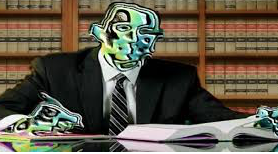
Image: 31dec2099.com
Once, in my comparative youth, I was in the office of the Southern Railroad. I walked through the wrong door and found myself in a room the size of a gymnasium filled with desks and hundreds of middle-aged clerks with those green desk lamps and green eye shades. I am certain that this Dickensian scene has long since vanished. All of those guys were fired long ago, replaced, most likely, with a single computer. Was this a disaster to employment and the national economy? Absolutely not!
People have been constantly predicting that automation would cause mass unemployment for at least a century. In one sense, it does. But temporarily. It has replaced farm workers, but in the process it made food products both more plentiful and cheaper. Instead, it directly and indirectly created non-farming jobs that didn’t exist when farming itself was labor intensive.
A classic is the effect of ATM Machines on the employment of tellers. It was widely predicted that these now ubiquitous machines would cause the number of tellers to shrink to virtually nothing. What actually happened was that the ATM revolution made branches cheaper to run and lead to an explosion of bank branch openings, which meant the market for tellers actually increased. Read all about it in this Ross Intelligence blog post.
They are making the same predictions for lawyers. The equivalent of the Southern Railroad gymnasium exists in large law firms. They are doing things like legal research with the assistance of computers. Or they are writing or analyzing agreements, sometimes with the assistance of new software. The prediction is that the computers are becoming self guiding, causing the subordinate lawyer who uses them to become expendable. Will the time come where a computer will write the briefs for both litigants and the judge’s computer will read the briefs and write the draft opinion? Maybe, and maybe within our lifetime, too.
Of course, a single lawyer already is doing the work of a dozen lawyers a century ago. And a paralegal is doing the work of 2 or 3 secretaries and a few more lawyers. But, as with banking, the amount of work has not remained static. The volume of legal work has grown so rapidly that large, medium and small law firms have continued to grow. Perhaps the number of practitioners will shrink in time. But their numbers will be replaced by AI professionals and a host of service providers, like webinar producers, technicians and others.
While these trends are unfolding, it turns out that lawyers need a whole lot of help to keep their practice on the rails. If you think I exaggerate, read a few posts in a relatively new blog, the Algorithmic Society — Medium, by Ken Grady.
Lawyers, it turns out, are only human. They make lots of mistakes and even more bad decisions. Law firms need to develop policies and protocols for doing everything — billing, emails, case preparation, case evaluation, etc. Then, the protocols need to be enforced. Another word for this process: algorithms.
Although humans can work out most of the law practice algorithms they need, they must rely upon computers to force the members of the firm to follow them. Most catastrophic cases of professional liability are the result of failure to follow tried and true policies of the firm and the larger the firm gets, the harder policy becomes to enforce.
If this sounds like Big Brother, welcome to the 21st Century. Yet even a solo lawyer needs the steadying hand of tried and true algorithms, self-imposed.
A fascinating book on the subject is Algorithms to Live By, The Computer Science of Human Decisions, by Brian Christian and Tom Griffiths. I am rereading it now. Most of the algorithms discussed the book have been the subject of academic papers and they are fascinating. Too much here for one post. So, I’ll report on them from time to time. There is an algorithm to help you hire a secretary (assuming you want one). There are a raft of algorithms to help to reorganize a bookshelf or your files or a vast amount of data. At some point, it is more accurate and effective to sample the data rather than to manipulate the whole body.
The point here is that the lawyer of tomorrow will be computer-assisted in ways that we, the practitioners of 2017, can hardly imagine. The wild card that makes prediction of the future of lawyering (and most everything else) is our inability to see what kind of technology is just around the corner and what will be its unintended consequences.
CLT
Tags: Algorithms to Live By > Ross Intelligence Report > The Algorithmic Society.
Tips on Getting a Good Night’s Sleep and Productivity
Posted by Cliff Tuttle| December 6, 2017 | © 2026
No. 1,367

Image: clearsklbogaine.com
The pleasure of a good night’s sleep is tremendous.
Here are some really good tips from business blogger Aaron Hoos on how to get a good night’s sleep and be more productive the next day. You’ve probably seen this topic discussed before, but this post is very thorough and worth the read.
CLT
Use “Clearboard”, not Plywood to Board Up a Vacant House.
Posted by Cliff Tuttle| December 6, 2017 | © 2026
No. 1,366

Clearboard is better than plywood for securing an abandoned house.
Image: allany.com
There is a growing trend among mortgage loan servicers who own vacant residential real estate through foreclosure to use a relatively new product called “Clearboard.” It reduces the appearance of blight and does not advertise the fact that the house is vacant. Here’s what the trade publication D S News tells the servicing industry.
CLT
CIVIL PRACTICE UPDATE: DROP OFF CONSENT ORDERS FROM JUDGE COLVILLE AVAILABLE IN ALLEGHENY COUNTY
Posted by Cliff Tuttle| December 6, 2017 | © 2026
No. 1,365
At a recent Civil Practice seminar, it was announced that Special Motions Judge Robert Colville will experimentally accept consent orders signed off by all counsel or certified by counsel as consented by all, by mail or drop off any day of the week. Eligible proposed orders must be true consent orders, not ones that are just “not opposed.” The latter, which are more common, have the potential for opposing counsel to change his/her mind before Judge Colville’s motions court on Fridays.
This procedure will save both counsel from the burden of attending Friday motions and standing in the long uncontested line.
Judge Colville took over from Judge Wettick this year as Special Motions Judge. Special Motions involve cases on the arbitration docket and discovery. However, once cases are placed on the civil trial list, they become the province of the Calendar Control Judge, Judge Folino.
CLT
« go back — keep looking »
Welcome
CLIFF TUTTLE has been a Pennsylvania lawyer for over 45 years and (inter alia) is a real estate litigator and legal writer. The posts in this blog are intended to provide general information about legal topics of interest to lawyers and consumers with a Pittsburgh and Western Pennsylvania focus. However, this information does not constitute legal advice and there is no lawyer-client relationship created when you read this blog. You are encouraged to leave comments but be aware that posted comments can be read by others. If you wish to contact me in privacy, please use the Contact Form located immediately below this message. I will reply promptly and in strict confidence.
Recent Posts
- Sheriff Sales in the COVID-19 Era
- MORTGAGE FORECLOSURE: Cares Act creates gigantic opportunity for borrows under federally-backed and owned mortgages.
- PA Appellate Courts Schedule Arguments Using Electronic Media
- US Supreme Court holds that juries must render unanimous decisions in state criminal cases
- Signs of the Times — the future shortage of dentists.