Proud Member of the Rapid Response Team for:

Click Here To Learn More About How You Can Help
Or
Call 412-378-8779
Categories
- 2012
- 2013
- 2016
- 2017
- 2018
- Advertising
- Advocacy
- Amazing!
- Appellate Practice
- Apps for Lawyers and Others
- AVVO Answers
- Bankruptcy
- Blawging
- Business
- Casa San Jose
- Case Update
- Christmas!
- Civil Litigation
- Civil Rights
- Civility and Courtesy in the Practice of Law.
- Congressional Redistricting
- Constitutional Law
- Construction Law
- Consumer Protection
- Contract Law
- Coronavirus
- Courthouse Scenes
- COVID-19
- Credit Card Collection Litigation
- Criminal Law
- Cyber security
- Decision making
- Employment Law
- Encore Post
- Environmental Law
- Estates and Trusts
- Ethics
- Evidence
- Fair Housing
- Fake News
- Family Law
- Fifty Years Ago
- fracking
- Future of the Law
- Great Lawyers
- History
- Holidays
- How to . . .
- Humor and Satire
- Immigration
- insurance
- Jack Sez
- Landlord and Tenant law and litigation
- Lawyering
- Legal Education
- Legal Ethics
- Legal History
- Legal Marketing
- Legal Technology
- Legal Writing
- Life Affirmation
- Life on the Internet
- Links
- Milestones
- Mortgage Foreclosure
- News Commentary
- Oil and Gas
- On line chicanery
- On-line Security
- One Hundred Years Ago
- Oriegate
- Orphan's Court Practice
- Personal Privacy
- Personal Productivity
- Phishing
- Pittsburgh
- Pittsburgh Legal Back Talk
- Pittsburgh Legal Community
- Pokemon Litigation
- Politics and Government
- Post September 11
- Practice of Law
- Privacy
- Property Assessments
- Real Estate
- Real Estate Contracts
- Reassessment 2012
- Retweets
- Right to Reputation
- SCOTUS
- Screenshots!
- Security and Privacy
- Senior Lawyers
- Seven Foundations of Time Mastery for Attorneys
- Signs of the Times
- Solo by Choice: The Review
- Tell Us Something . . .
- Ten Years of Pittsburgh Legal Back Talk
- Tenth Anniversary
- Tenth Anniversary Year of PLBT
- The continuing American Revolution
- the Review
- trademark and service mark
- Trends in the Law
- UTPCPL
- Vocabulary Word of the Day
- Weekend Book Review
- Winners and Losers
- Words Lawyers Use
- Workers Compensation
- Zoning
Pennsylvania Associations Code Amendments to Change Corporate Filings Beginning on July 1, 2015.
Posted by Cliff Tuttle| April 22, 2015 | © 2026
No. 1,142
ASSOCIATIONS CODE (15 PA. C.S.) AND NAMES (54 PA.C.S.) OMNIBUS AMENDMENTS; Act of October 22, 2014, PL 2640, No. 172

Image: harborcompliance.com
As July 1 approaches, you’ll be hearing a lot more about this statute. Also known as the Entity Transactions Act or Law, it substantially modernizes and rearranges Title 15.
Under the new law, there are five fundamental kinds of transactions that may take place, regardless of the form of the business entity.
– Merger of one entity with or into another;
– Conversion of one type of entity to another type of entity;
– Interest exchange between two entities so that one of them is controlled by the other without a merger;
– Division of one existing entity into two or more resulting types of associations;
– Domestication into Pennsylvania of an entity originally organized in another state.
There will also be several new filing forms that will be available on the Corporations Bureau website before July 1.
There will undoubtedly be a variety of seminars coming out in the near future. Keep tuned in.
CLT
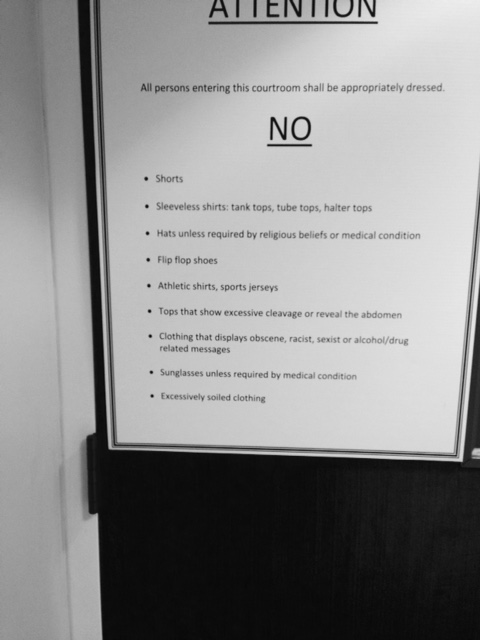
Signs of the Times: Laying Down the Law at the Butler County Courthouse.
Posted by Cliff Tuttle| April 21, 2015 | © 2026
No. 1,141
This sign was posted outside a courtroom in the Butler County Court House. Justice is not blind in all cases.
We saw a young lady on her way to the courtroom with a large tattoo on her upper back and another on her arm. No prohibition against uncovered tattoos . . . yet.
If your client shows up violating these rules, (you and I never would) maybe you can keep a spare raincoat in the car.
Supreme Court Amends Rules to Permit Minors to Sue and Be Sued in Magistrate’s Court Without Appointment of a Guardian
Posted by Cliff Tuttle| April 19, 2015 | © 2026
No. 1,140

Image: law track.com
It is now possible for a minor (defined as a person under age 18) to sue and be sued before a Magisterial District Judge. This includes a civil action and a landlord and tenant action for possession of real property.
The Official Note states: “This difference in procedure is due in part to the determination that magisterial district judges should not be required or allowed to appoint guardians ad litem, considering the expedition with which civil actions before magisterial district judges are required to be handled under the general rules of civil procedure applicable to magisterial district judges. Since magisterial district judges will not be permitted to appoint guardians ad litem (see Rule 819), it would be manifestly unfair to allow a minor plaintiff to bring suit by a “next friend” guardian but to require the appointment of a guardian by a court of common pleas before a suit could be brought against a minor defendant. It is considered that ample protection will be afforded the minor party under Rule 805. See also the note to Rule 807.”
Of course, a guardian may still represent a minor before a magisterial district judge (MDJ).
Service may be made upon the minor. A judgment may be entered against the minor and the guardian, if any, shall not be personally liable.
In addition, the minor who is not represented by a guardian may enter into a compromise or settlement. However, if there is a sum due to the minor who is not represented by a guardian, it must be paid to the natural guardian.
The Rules Change also addresses, “incompetents”, who are now designated as incapacitated persons. An incapacitated person is in all cases to be represented by his guardian, who would have been previously appointed by the Orphans Court.
Under Rule 813, if the MDJ finds that a party is an incapacitated person, but is not represented by the guardian, he may dismiss the action without prejudice as to the incapacitated person only. The complaint may also be amended while the action is pending.
Under Rule 815, the MDJ shall dismiss a judgment against an incompetent person not represented by a guardian, unless the guardian consents. But a judgment in favor of an incompetent person shall not be vacated or set aside for lack of the participation of a guardian.
The Rule Amendments and comments do not state whether appointment of a guardian is required on appeal of a magistrate’s judgment to Common Pleas Court. If either party appeals, must the minor seek an appointment of a guardian ad litem before the case can proceed? Does this mean that the minor cannot file a complaint or answer until this is accomplished?
One has to assume that such a situation would be extremely rare. A minor could not legally enter into a contract, such as an apartment lease, and if a parent or guardian has signed the lease, he or she would be a necessary party.
In the case of a small tort, such as property damage by a minor, the plaintiff would very much wish the parent/ guardian to be a party. However, under the Rules, the minor, not the guardian, would be financially responsible for the judgment. Since most minors living at home have little income and few assets, this may not afford much relief. A criminal prosecution would be more likely in such a circumstance.
CLT
Tags: guardianship > incapacitated persons > magisterial district judge rules > rights and duties of minors
The Apple Watch as a Productivity Tool.
Posted by Cliff Tuttle| April 18, 2015 | © 2026
No. 1,139

Image: Breathecast.com
The first Apple Watches are scheduled to ship on or about April 24. Like children anticipating Christmas, many can hardly wait. But the Apple Watch is not an expensive toy. It is a tool, a valuable one for people who are out and about, including busy lawyers.
Time Management Ninja, a blog by Craig Jarrow, explains ten ways that the Apple Watch will save time. All 10 will be beneficial to lawyers.
Instead of a buzz that others can hear (and sometimes you don’t) the Apple Watch will alert you of an incoming call or message by a silent tap on the wrist. Although you are constantly being directed to turn off your phone by the judge’s tipstaff and other authority figures, there are times when you can’t.

Image: arstechnica.com
Yes, there are certain calls that must be taken no matter where you are — your client had an accident or got lost on the way to a hearing, a family emergency occurred, you left your file in the office. The Apple Watch alerts you by a tap on the wrist.
Thus, you can leave the phone on, even while in court. Nobody knows you are getting a call. You can dismiss it instantly. No quick draw to turn off the phone is required.
You can call up a list on your phone. This could enable you to seamlessly refer to your notes while making a presentation. Of course, if your opponent and the judge have Apple Watches too, the magic is gone.
While working at your desk on a deadline, you can keep an eye on incoming calls or check your calendar. You can set alarms to silently tell you that you need to drive to a meeting or make a scheduled call.

Image: slashgear.com
You can also take calls while driving without taking your eyes off the road. No digging for a phone that stops ringing about the time you have it in your hand. If necessary, you can ask Siri to make a call or tell you the address of your destination.
You can keep better time for billing purposes, too. Tap to start, tap to stop, tap to start again.
And as Craig Jarrow points out, who knows what else? As we learn how to use this tool, we will find other uses we never even imagined.
CLT
Tags: Apple Watch and lawyers > lawyer productivity > Time Management Ninja
Internet Explorer and On-line Filing in the Allegheny County Department of Court Records
Posted by Cliff Tuttle| April 17, 2015 | © 2026
No. 1,138

Credit: hjsessentia.co.uk
Back in the day, Internet Explorer (IE) was the overwhelming favorite web browser, attaining its peak of about a 95% usage share in 2002 and 2003, according to Wikipedia. The article stated:
“Its usage share has since declined with the launch of Firefox (2004) and Google Chrome (2008), and with the growing popularity of operating systems such as OS X, Linux, iOS and Android that do not run Internet Explorer. Estimates for Internet Explorer’s overall market share range from 16.9% to 57.38% (or even as low as 13.09% when counting all platforms.)”
There once was a version of Internet Explorer for Macintosh. It didn’t last too long. As Steve Wosniak and others soon discovered, it continuously crashed.
Lawyers, who once were overwhelmingly Microsoft users, now include a growing number of Macintosh devotees. This trend, which started with solos and small practices, blossomed among the larger firms with the advent of iPad. If you need confirmation of this phenomenon, read a few posts from The Mac Lawyer blog. The introduction of the Apple Watch, from all indications, will only solidify and expand this trend.
But incompatibility with certain operating systems and competition among platforms was not the only reason for the decline of IE. Its primary problem, and the one most troubling to lawyers, was and is security. The threat of malware and the like grew so ubiquitous that patching IE has become an industry. And now, to nobody’s surprise, except its most dedicated fans, IE is being phased out. It will be replaced by a new product, presently called Project Spartan. There’s a beta version out, but it is acknowledged by its developers to be not ready for prime time. In the meantime, IE users are in limbo.
IE has been the chosen internet browser platform of on-line search and filing systems used by recorders of deeds and court records keepers since the beginning. This might have made sense in the old days, but it is increasingly difficult to justify in today’s fast-moving internet-based world. Some of these dinosaurs only support IE access, while others, like the Allegheny County Department of Court Records and Department of Real Estate, have traditionally been accessible by other platforms, such as Firefox and even Macintosh’s Safari.
But now, the Allegheny County Department of Court Records appears to be taking a retrograde path. I have been experiencing problems in remote filing and have been required to file certain documents in person. This includes transactions where credit card payments are involved. Until recently, this was not a problem. Now it is.
The explanation I have received is that that certain “software upgrades” have been installed. My attention was called to the warning on their Welcome Page that electronic filing is “optimized for Internet Explorer ONLY” [sic]. Welcome, indeed.
A parallel situation has existed for a long time with the Department of Real Estate — Allegheny County newspeak for Recorder of Deeds. Once I was able to look at and order copies of deeds and other instruments on line, but not for a long time. Until a few years ago, I was able to look at the indices using my Mac browser, I now must use Firefox. But even Firefox only works in a rudimentary way. I haven’t even attempted to use their on-line filing system.
This circumstance is not universal in the Allegheny County on-line information system. Real Estate Assessment works just fine using Safari. However, no credit card transactions are involved.
I understand that there are budgetary restrictions on overhauling a system as large as the one used by Allegheny County. But it has been installing “improvements” that are increasingly dependent on a defunct internet platform that has more holes than a large block of swiss cheese. Since Microsoft itself has abandoned ship on IE, it is time for Allegheny County and others to do some emergency planning. When they do (and they must) it is my sincere hope that they will design their system to support popular non-microsoft platforms, like Macintosh OS X and iOS.
CLT
Tags: Apple Watch > IE > Internet Explorer > On-line filing > Project Spartan
A Parable of the Persistent Robin.
Posted by Cliff Tuttle| April 15, 2015 | © 2026
No. 1,137

Image:kidzone.ws
While I was on the telephone today, I noticed a robin in a garden plot. She had taken hold of a thick string about 3 feet long, fastened to a post. Nesting material, I presume.
I say “she” because, according to information acquired in elementary school, males have a bright orange breast while females are muted in color.
She pulled on it and jumped around, trying to get a better angle. Then she flew away a short distance. Nothing she tried availed — garden string is pretty strong, you know.
So she flew away, but not too far. In a minute she was back pulling the same string. But it was to no avail.
Then a blue jay came along. He (bright color) sat on the garden fence and watched the robin trying to break the string.
The robin flew a few feet away to get a better view of the situation. So, the blue jay flew down to the ground and picked up the end of the string. He jumped around and flew around. He tried every angle. No success. Eventually, he flew away.
Immediately, the robin was back. Again she jumped around with the end of the string in her beak. At that point, I seriously thought about going down to the garden with a pair of scissors. But I had other things to do.
The next time I looked at the garden, the string was gone.
Take heart, nest builders everywhere!
CLT
Robotic Lawyers and Other Science Fiction About the Future.
Posted by Cliff Tuttle| April 12, 2015 | © 2026
No. 1,136
Credit: Wikipedia
A filler article in USA Today recently listed “small-time” lawyers as a professional group that will not exist in 15 years. It states that computers will take over the services presently being performed by these lawyers.
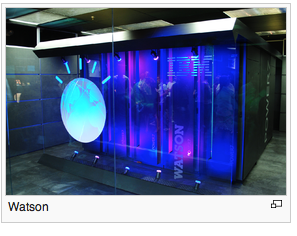
Such predictions are not new. The age of artificial intelligence is dawning. The IBM Watson computer, which beat two of the all-time champions at Jeopardy, is being adapted to render medical diagnoses. According to the Wikipedia article linked above, 90% of the nurses who currently use a version of Watson adapted for nursing follow its advice. It has been suggested that one day Watson will analyze cases and write briefs. And of course, another version of Watson for judges will read the briefs and write opinions.
But don’t get too carried away by all of this. Watson, after all, is still only a tool used by living, breathing humans. The prospect of something so complicated as a legal dispute being analyzed, presented, decided or even settled without direct intervention of humans is far enough in the future. It is safe to say that artificial intelligence will transform the whole world in millions of ways before that happens. Plenty of other professions, such as teachers, pharmacists, real estate agents and even accountants will probably become extinct, or nearly so, first.
Nevertheless there is no doubt that the practice of law is changing. Many tasks that were once performed by lawyers are being performed by paralegals, usually under the supervision of lawyers. The legislature has enabled non-lawyers to present cases in certain tribunals , such as district magistrate’s hearings, unemployment hearings and assessment appeals. Forms for wills, leases and the like are available on the internet, as are kits for incorporating a business, getting a divorce, writing a will and the like. And, most significantly, residential real estate closings have become the domain of non-lawyer settlement services, many of them owned and operated by lenders and large real estate brokers.
Moreover, technology has affected the practice of law in a big way. Lawyers have an array of tools that make them more productive and incidentally, more cost-effective. These include legal databases, websites, software and especially email, cell phones, iPads and soon, the Apple Watch.
But the idea that sole practitioners and small firms will cease to exist in 15 years because of technology and other changes is ludicrous. Moreover, the USA Today article predicts that the solos and small firms will vanish, while larger firms will not. Things are a little more complicated than that.
Large firms charge large hourly fees. They have to — they have a large nut to carry. But most clients cannot afford them and the overwhelming majority of cases and other legal tasks do not justify high fees. Lawyers at big firms know this. They routinely turn down work that is too small or refer it to more affordable lawyers who are a better match for the client and the job.
Although mega-firms have been growing as they open branches or merge around the country and the world, there is a significant counter-trend. Refugees from large firms frequently set up “boutiques” that are highly specialized in a narrow area of practice. Clients at their former firms follow them.
Solos and small firms come in all varieties. They comprise approximately 2/3 of the lawyers in Allegheny County. Many have found a market niche in which they successfully compete for clients.
The claim voiced in USA Today that work for independent practitioners is drying up is simply not true. Yes, some of it is changing, but a new generation of lawyers is changing, too. For example, you find more of them in family practice, one of the fastest growing areas in the law.
Quite frankly, almost every area of the law has become more complex in the last few decades. There are hidden pitfalls and opportunities that are unknown to lawyers who practice outside that specialty. Lay people who decide to represent themselves in court are doubly vulnerable. They may escape harm once or twice, but eventually something they don’t know will jump up out of nowhere and bite them.
And the idea that unlicensed advocates can do just as well as licensed attorneys at small tribunals is not supported by experience. I have cases against them occasionally. The gaps in their education and training are usually glaring. They have only a rudimentary understanding of the law of evidence. Many ask questions poorly, often lapsing into speeches that are quickly cut off by objection. And they rarely research the law that is applicable to their case, relying instead upon maxims and rules of thumb that someone told them. It is unlikely they save their employers money in the long run. What they might save in attorneys fees (I say might, because many lawyers charge competitively) they give back in cases lost that could have been won or mitigated.
At least for the next 15 years, and probably far beyond, there is going to be a place for small-time lawyers because they fill a need in a cost-effective way. Change will close doors, but it will also open others.
CLT
Tags: IBM Watson > productivity through technology > professions that will become extinct > small law firms > small-time lawyers > sole practitioner lawyers > USA Today > Watson
Old Dogs/New Tricks and Other Bunk We Tell Ourselves.
Posted by Cliff Tuttle| April 5, 2015 | © 2026
No. 1,135
Judge Carol Los Mansmann
It is hard to think of an old adage that is more disempowering than this one.
It is a negative idea, intended to discourage old dogs from even trying to learn something. In a rapidly changing world, this leads to the marginalization of some of our most experienced and capable people. As a long-time dog owner, I can tell you that this dubious advice doesn’t even apply to dogs.
The truth is, as long as the mind is reasonably competent, we are learning new things continuously. Its automatic, we have no choice. But we can choose what to learn. Will it be a foreign language, a new skill or sitcom plots on television?
The old are not the only victims of such negative thinking. I recently heard a lecturer retell how, when he failed his first arithmetic test, his mother consoled him by stating that nobody in the family was any good at math. This well-meaning woman was telling her son that he couldn’t learn something due to a factor beyond his control. He believed it. Then, far down the academic road, when he had to study statistics to earn a degree in psychology, he was forced to confront and overcome this untested hypothesis. How many similar untested hypotheses have we all allowed to become deeply rooted in our subconscious?
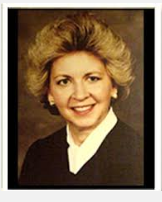
This brings to mind the well-known phenomenon that young women have historically chosen careers dictated by social expectations. Once again, destructive negative thinking. Fortunately, for them and for all of us, this “wisdom” is now being successfully challenged. Carol Los Mansmann, who became a member of the Third Circuit Court of Appeals, told the story of how her high school guidance counsellor tried to throw cold water on her ambition to become a lawyer and then a judge. The counsellor advised her to be a legal secretary.
That guidance counsellor was limited by an unspoken assumption that the world would remain the same. Then, within a few years, women started to attend law school in greater numbers and they now occupy more than half of the seats in most law schools. Eventually, many of them became judges. Would it surprise you to learn that approximately half of the judges in Philadelphia today are women? Carol Los Mansmann was not first, but she was a pioneer and mentor to others who followed.
And by the way, legal secretaries have become a dying breed in an age of electronic devices. How many of them listened to their guidance counsellors and later regretted not having disregarded the advice? So much for stereotypes.
Yes, there are limitations to everything. We can learn what they are by observing and thinking, not by mindlessly repeating old saws with negative messages. Old, young or in-between, when anybody, including yourself, says that you cannot do something, your immediate response should be: “Why not?”
CLT
Tags: Carol Los Mansmann > limiting assumptions > Old dogs can't learn new tricks
Consumer Complaint Update: You Can Write a Narrative But CFPB Probably Won’t Read It.
Posted by Cliff Tuttle| April 4, 2015 | © 2026
No. 1,134
 DS News, a newsletter for home loan mortgage servicers and lenders, reports on an industry study of the federal Consumer Finance Protection Bureau’s consumer complaint database. CFPB has been taking consumer complaints against lenders and their minions for several years and storing them in a publicly available data base. But they reportedly never investigate or attempt to resolve the complaint. Now CFPB has expanded this database to include a narrative that they won’t be investigating either.
We will never know how many of these people who filed complaints thought that they were doing something about their problem. All they were really doing, is gossiping about themselves. If you have a serious lender problem, don’t file a complaint with the CFPB. Call a lawyer.
CLT
Brevity is the Soul of What?
Posted by Cliff Tuttle| March 29, 2015 | © 2026
No. 1,133
The Federal judiciary is proposing to limit briefs to 12,500 words. The current limit is 14,000.
The advocates of the Rule change are mostly judges.The opponents are primarily appellate lawyers who worry that they might commit malpractice if they fail to cite a case or state every argument they can invent.
Of course, if lawyers read more widely, they might learn that the human mind is quickly bored, including the minds of judges. And if they remembered more of the literature they read before becoming so tedious, they might remember that brevity is the soul of . . . something. Here’s a brief refresher course:

Welcome
CLIFF TUTTLE has been a Pennsylvania lawyer for over 45 years and (inter alia) is a real estate litigator and legal writer. The posts in this blog are intended to provide general information about legal topics of interest to lawyers and consumers with a Pittsburgh and Western Pennsylvania focus. However, this information does not constitute legal advice and there is no lawyer-client relationship created when you read this blog. You are encouraged to leave comments but be aware that posted comments can be read by others. If you wish to contact me in privacy, please use the Contact Form located immediately below this message. I will reply promptly and in strict confidence.
Recent Posts
- Sheriff Sales in the COVID-19 Era
- MORTGAGE FORECLOSURE: Cares Act creates gigantic opportunity for borrows under federally-backed and owned mortgages.
- PA Appellate Courts Schedule Arguments Using Electronic Media
- US Supreme Court holds that juries must render unanimous decisions in state criminal cases
- Signs of the Times — the future shortage of dentists.