Proud Member of the Rapid Response Team for:

Click Here To Learn More About How You Can Help
Or
Call 412-378-8779
Categories
- 2012
- 2013
- 2016
- 2017
- 2018
- Advertising
- Advocacy
- Amazing!
- Appellate Practice
- Apps for Lawyers and Others
- AVVO Answers
- Bankruptcy
- Blawging
- Business
- Casa San Jose
- Case Update
- Christmas!
- Civil Litigation
- Civil Rights
- Civility and Courtesy in the Practice of Law.
- Congressional Redistricting
- Constitutional Law
- Construction Law
- Consumer Protection
- Contract Law
- Coronavirus
- Courthouse Scenes
- COVID-19
- Credit Card Collection Litigation
- Criminal Law
- Cyber security
- Decision making
- Employment Law
- Encore Post
- Environmental Law
- Estates and Trusts
- Ethics
- Evidence
- Fair Housing
- Fake News
- Family Law
- Fifty Years Ago
- fracking
- Future of the Law
- Great Lawyers
- History
- Holidays
- How to . . .
- Humor and Satire
- Immigration
- insurance
- Jack Sez
- Landlord and Tenant law and litigation
- Lawyering
- Legal Education
- Legal Ethics
- Legal History
- Legal Marketing
- Legal Technology
- Legal Writing
- Life Affirmation
- Life on the Internet
- Links
- Milestones
- Mortgage Foreclosure
- News Commentary
- Oil and Gas
- On line chicanery
- On-line Security
- One Hundred Years Ago
- Oriegate
- Orphan's Court Practice
- Personal Privacy
- Personal Productivity
- Phishing
- Pittsburgh
- Pittsburgh Legal Back Talk
- Pittsburgh Legal Community
- Pokemon Litigation
- Politics and Government
- Post September 11
- Practice of Law
- Privacy
- Property Assessments
- Real Estate
- Real Estate Contracts
- Reassessment 2012
- Retweets
- Right to Reputation
- SCOTUS
- Screenshots!
- Security and Privacy
- Senior Lawyers
- Seven Foundations of Time Mastery for Attorneys
- Signs of the Times
- Solo by Choice: The Review
- Tell Us Something . . .
- Ten Years of Pittsburgh Legal Back Talk
- Tenth Anniversary
- Tenth Anniversary Year of PLBT
- The continuing American Revolution
- the Review
- trademark and service mark
- Trends in the Law
- UTPCPL
- Vocabulary Word of the Day
- Weekend Book Review
- Winners and Losers
- Words Lawyers Use
- Workers Compensation
- Zoning
GOODBYE MY SWEET MYLAR!
Posted by Cliff Tuttle| June 14, 2012 | © 2026
No. 850
 Remember the mimeograph? Teachers used it a lot when we were in high school and college. You ran it through your typewriter, pilled off the backing and ran off a hundred copies or so. Then came photocopies and it was goodbye mimeo.
Well a similar technology had bitten the dust. Large survey plans were usually drawn on large sheets of mylar, a translucent sheet that could be used to print impressions on paper. The Recorder of Deeds (now known by the Orwellian “Department of Real Estate”) required that subdivision plans be presented on mylar so that they could be copied easily. Now, that’s not necessary. So, henceforth, use paper.
CLT
“Predictive Coding” is a trend worth noting.
Posted by Cliff Tuttle| June 11, 2012 | © 2026
No. 849
 Electronic discovery is so expensive that it has heretofore been confined to cases involving high stakes. However, a variety of technologies have emerged that sometimes enable searchers to cull out a vast number of documents. The Pittsburgh Post-Gazette reported on a Virginia federal case in which the court authorized the use of Predictive Coding over the objections of the opposing party. Local e-discovery pioneer Karl Schinneman is the expert witness in this case.
Of course, as a useful technology becomes cheaper, its use becomes more widespread. It is not yet clear whether electronic discovery will become the norm in lower dollar cases. Pointing in that direction is the common observation that many small businesses do the overwhelming portion of their communication with customers, suppliers and others by email. In a small case, the dilemma is twofold. A smaller sample of documents is involved which must be pulled efficiently from an ever-growing population. But the only way to be sure that a document is responsive to the discovery request is to read it.
There is another dimension to electronic documents. They can be studied for their metadata. That means that edits in prior drafts may reveal something that the author didn’t want to communicate. Or it may reveal information about other matters. This is why there is ethical concern over lawyers providing documents written in Word or other searchable media formats. Lawyers often use old documents as templates, enabling a recipient to read confidential information.
CLT
Ray Bradbury and Self-Education
Posted by Cliff Tuttle| June 10, 2012 | © 2026
No. 848
 Just a footnote to the reports on the death of Ray Bradbury, author of Fahrenheit 451, a few days ago. He graduated from High School during the height of the depression and could not afford the cost of higher education.So he studied full time at the public library.
In the age of the internet, self-education can be accomplished without leaving the house. Yes, self-ed lacks certain features of earning a degree. But there are also advantages, too. Like creativity. When you educate yourself you don’t have the disadvantage of being herded into the same p;astute as all the other sheep.
CLT
The New Prohibition.
Posted by Cliff Tuttle| June 4, 2012 | © 2026
No. 847
 The NYT reported that New York Mayor Bloomberg came out in favor of a proposal by the Governor of New York to limit arrests of persons possessing marijuana during traffic stops.
On line comment: Not applicable to persons found with weed and 24 ounce Coke.
Beware of Cola Madness.
CLT
Life or Death in Egypt.
Posted by Cliff Tuttle| June 3, 2012 | © 2026
No. 846
 A court in Egypt sentenced former President Mubarak to life for the murder of protesters. This sparked public outrage, as reported in the Wall Street Journal.
What a breath of fresh air. Democracy is experiencing a violent birth in one of the world’s oldest civilizations. It would have been politically expedient for a court to give Mubarak and other members of his former government a death sentence. The fact that it did not happen says that the judiciary in Egypt is not a politically-driven institution.
CLT
“Overlawyered” on Texting Lawsuit against Pittsburgh Penguins.
Posted by Cliff Tuttle| June 3, 2012 | © 2026
No. 845
 He couldn’t have been much of a fan.
Check out the class action suit against the Pittsburgh Penguins alleging over-texting. I’m inclined to agree with Walter Olson on this one. If you sign up for three texts per week from the Pens and get 4 or 5, you’re getting a bonus. The cause of action is based upon a federal statute intended to protect cell phone subscribers from unwanted text messages. I could see the fan being annoyed if the Pens started sending texts every day, but 5 instead of 3? Get off it!
The remedy is to unsubscribe — not file a class action.
CLT
Foundations No. 5 and 6: Email and Telephone
Posted by Cliff Tuttle| June 3, 2012 | © 2026
No. 844
 Email seems to be made for lawyers. It is especially useful to solo practitioners who have long ago become their own secretaries. The time and money cost of sending and filing a letter has been reduced to a tiny fraction. You may well send twenty or thirty of them a day, maybe more.
And yet, the same tool that enables you to be hundreds of times more productive than you were in the typewriter, paper, envelope, stamp, mailbox era — the technology miracle — can overwhelm you. If you can send dozens, others can send you hundreds, thousands. And, as we have all found out, you can be spammed into oblivion.
Julie A. Flemming, author of Seven Foundations of Time Mastery for Attorneys, lays out the rules for handling both the incoming and the outgoing.This includes when to use some other medium of communication.
She also suggests some rules for more effectively working the telephone. They include making appointments for phone conferences and taking good notes while on a call. Post-call emails, confirming the information discussed and conclusions reached can be especially productive. Telephone is especially useful for back-and-forth discussions and email is an effect way to preserve and memorialize the outcome.
CLT
Foundation 4: Manage Your Physical Environment
Posted by Cliff Tuttle| June 3, 2012 | © 2026
 No. 843
We’ve been reviewing the Seven Foundations of Time Mastery by Julie A. Fleming, lawyer and consultant. She wrote this book in 2008 and recently brought out a revised version. It is a handy little book, full of ideas. It gives you an opportunity to collect your own ideas on the topics through workbook exercises. If you feel you need a guide to help put your work patterns back on track, this may be the ticket.
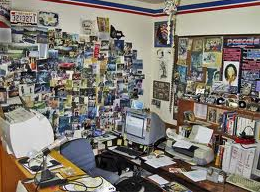
Everybody knows the effect of paper clutter. It chokes. It prevents you from doing your work effectively. Yes, sometimes things don’t get done because you can’t seem to lay your hands on the file or key documents.
Julie suggests a number of basic techniques and strategies for conquering paper. Nothing radical, nothing you haven’t heard — just all in one place. If you want to improve your filing system, but don’t know how to start . . .
CLT
Foundation of Time Mastery Three: Delegating Effectively
Posted by Cliff Tuttle| May 30, 2012 | © 2026
No. 842
 This week we are exploring the Seven Foundations of Time Mastery for Attorneys, a book by Julie A. Fleming, attorney and consultant. Foundation 1 involved managing your energy and Foundation 2 was about setting priorities.
Although lawyers think they are good at delegating, Fleming writes that most lawyer’s delegation skills are only passable.
“Lawyers often tend to rush through delegation, thinking more about the time savings that delegation generates and the perfect product that will emerge from the delegate’s work than about the directions and information that will reap those rewards. ” But, of course, poor delegation does not save time at all. It squanders it.
Successful delegation requires thought and planning. The details of a project must be thought through completely, just as an architect designs a structure in full and writes detailed specifications before the builder has the opportunity to begin work. The process of planning and then explaining the plan clearly cannot be rushed. On the plus side, a well-trained paralegal will soon be able to perform certain tasks equally or better than the master. And — this is important — she will have the time to do it promptly and you won’t.
Don’t delegate too much or too little. And once you do, don’t micromanage the job. Your job is not to redo the work, but to offer helpful ideas. We’ve all worked for lawyers who could not resist over-participation. Some insist on citing an excessive number of cases, raising too many issues and flogging arguments to death. On the other hand, just the right amount of guidance along the way can save hours of rewriting. How do you know how much is enough? Experience and good communication.
Specific and reasonable deadlines should be established from the beginning. They should allow enough time to do the job and, if necessary, to fix it.
CLT
Foundation 2: Set Priorities and Act Accordingly.
Posted by Cliff Tuttle| May 29, 2012 | © 2026
No. 841
 The Second of the Seven Foundations of Time Mastery for Attorneys, as stated by Attorney and Consultant Julie A. Fleming, is to set priorities and use them to guide your actions.”Knowing your top priorities each day, ” she says,” increases the likelihood that you will accomplish (or t least advance) the most important tasks each day.”
It will also help handle frequent interruptions, a major problem for lawyers, since it will increase your awareness of what is important.
Successful prioritization requires four steps:
– Capture all of the task to be accomplished;
– Assign a priority to each task;
– Devise a plan to handle each task according to its priority;
– Execute the plan effectively.
The task with the highest priority may simply be the one with the shortest deadline. How often have you worked on something for hours, only to discover that you should have been working on something else that must be accomplished much sooner?
On the other hand, how often have you allowed yourself to be taken away from an important task to work on something else? What happened? I’ll bet that you completed neither task. In order to avoid such an outcome, identify what is most important to complete that day and complete it.
Read Julie’s book to get the details on how to master this skill. Finishing something means that you don’t have to spend time figuring it out all over again. That alone is a major time saver.
CLT
« go back — keep looking »
Welcome
CLIFF TUTTLE has been a Pennsylvania lawyer for over 45 years and (inter alia) is a real estate litigator and legal writer. The posts in this blog are intended to provide general information about legal topics of interest to lawyers and consumers with a Pittsburgh and Western Pennsylvania focus. However, this information does not constitute legal advice and there is no lawyer-client relationship created when you read this blog. You are encouraged to leave comments but be aware that posted comments can be read by others. If you wish to contact me in privacy, please use the Contact Form located immediately below this message. I will reply promptly and in strict confidence.
Recent Posts
- Sheriff Sales in the COVID-19 Era
- MORTGAGE FORECLOSURE: Cares Act creates gigantic opportunity for borrows under federally-backed and owned mortgages.
- PA Appellate Courts Schedule Arguments Using Electronic Media
- US Supreme Court holds that juries must render unanimous decisions in state criminal cases
- Signs of the Times — the future shortage of dentists.