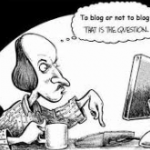
Proud Member of the Rapid Response Team for:

Click Here To Learn More About How You Can Help
Or
Call 412-378-8779
Categories
- 2012
- 2013
- 2016
- 2017
- 2018
- Advertising
- Advocacy
- Amazing!
- Appellate Practice
- Apps for Lawyers and Others
- AVVO Answers
- Bankruptcy
- Blawging
- Business
- Casa San Jose
- Case Update
- Christmas!
- Civil Litigation
- Civil Rights
- Civility and Courtesy in the Practice of Law.
- Congressional Redistricting
- Constitutional Law
- Construction Law
- Consumer Protection
- Contract Law
- Coronavirus
- Courthouse Scenes
- COVID-19
- Credit Card Collection Litigation
- Criminal Law
- Cyber security
- Decision making
- Employment Law
- Encore Post
- Environmental Law
- Estates and Trusts
- Ethics
- Evidence
- Fair Housing
- Fake News
- Family Law
- Fifty Years Ago
- fracking
- Future of the Law
- Great Lawyers
- History
- Holidays
- How to . . .
- Humor and Satire
- Immigration
- insurance
- Jack Sez
- Landlord and Tenant law and litigation
- Lawyering
- Legal Education
- Legal Ethics
- Legal History
- Legal Marketing
- Legal Technology
- Legal Writing
- Life Affirmation
- Life on the Internet
- Links
- Milestones
- Mortgage Foreclosure
- News Commentary
- Oil and Gas
- On line chicanery
- On-line Security
- One Hundred Years Ago
- Oriegate
- Orphan's Court Practice
- Personal Privacy
- Personal Productivity
- Phishing
- Pittsburgh
- Pittsburgh Legal Back Talk
- Pittsburgh Legal Community
- Pokemon Litigation
- Politics and Government
- Post September 11
- Practice of Law
- Privacy
- Property Assessments
- Real Estate
- Real Estate Contracts
- Reassessment 2012
- Retweets
- Right to Reputation
- SCOTUS
- Screenshots!
- Security and Privacy
- Senior Lawyers
- Seven Foundations of Time Mastery for Attorneys
- Signs of the Times
- Solo by Choice: The Review
- Tell Us Something . . .
- Ten Years of Pittsburgh Legal Back Talk
- Tenth Anniversary
- Tenth Anniversary Year of PLBT
- The continuing American Revolution
- the Review
- trademark and service mark
- Trends in the Law
- UTPCPL
- Vocabulary Word of the Day
- Weekend Book Review
- Winners and Losers
- Words Lawyers Use
- Workers Compensation
- Zoning
And Now, the Moment you’ve all been waiting for . . .
Posted by Cliff Tuttle| April 25, 2011 | © 2026
No. 610
TWEET FOLLOWER 950
ED’s WOOD SHED

|
Pittsburgh, PA
|
| 5 | 174 | 25 |
| tweets | following | followers |
|---|
Tweet Follower 949: Guzman Law Group, Los Angeles.
Posted by Cliff Tuttle| April 25, 2011 | © 2026
No. 609

Guzman Law Group
Tweet Follower No. 948: Conrad Saam, Avvo Marketing Maven
Posted by Cliff Tuttle| April 25, 2011 | © 2026
No. 608
The 948th Tweet Follower for PittsburghLegal is Conrad Saam of AVVO. Under the direction of Conrad, AVVO has been blazing new trails in marketing for lawyers. This includes posting AVVO Answers, lawyer answers to AVVO reader questions, on Twitter. I posted my first AVVO Answer on Twiiter today:

Conrad also made a comment on this blog about a month ago regarding changes in the algorithm for lawyer ratings that caused most lawyers’ AVVO ratings to go down.
Here’s how his listing appears in Twitter.

Conrad Saam
CLT
Think Technology, Not Jobs!
Posted by Cliff Tuttle| April 24, 2011 | © 2026
No. 607
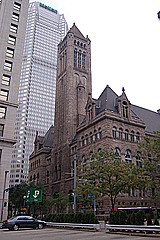 Talk about jobs is good politics and bad policy.
As former Secretary of Labor, Robert Reich, has often observed, farming was once a very labor-intensive occupation. The greater good of society was served by employing fewer people and more technology. And so it is with all products and services. Increased productivity means reduced cost, which in turn means that the consumer obtains more value for his dollar and retains more of them. By contrast, government policies that focus on preserving or creating employment as the primary focus do exactly the opposite.
The key, on both fronts, is technology. Technology creates productivity, in part by reducing employment. The personal computer eliminated the need for many secretaries and other helpers in law offices. Before faxes, my old office employed a small army of couriers hand delivering packages to other offices around town. Other examples abound.
So, instead of promoting employment as the focus of political discourse, why not promote the development of technology and technology education? Continuous education, self-education and formal education, makes more productive and more employable workers. Rather than trying to increase employment opportunities for what we already know, increase knowledge of technology as it emerges. For example, the Apple Store will give you as many lessons on how to use the computer you bought recently as you want, for a very reasonable annual fee. And don’t say you know all about it — you only know the functions you are using. There are many more skills that, once you become acquainted with them, you’ll find you needed them and didn’t know it. Then there is what will happen next week . . .
CLT
Tweet Follower No. 947
Posted by Cliff Tuttle| April 24, 2011 | © 2026
No. 606

Also — AVVO has just introduced a new feature that enables AVVO Answers to be posted on Twitter. So, if you follow PittsburghLegal on Twitter, you’ll not only find out about new posts, you’ll be able to read AVVO Answers to questions involving Pennsylvania Law.
RESPA and the Administrative Brokerage Commission.
Posted by Cliff Tuttle| April 24, 2011 | © 2026
No. 605
Kudos to Brendan Lupetin for bringing to our attention a federal case in Alabama that holds that the so-called Administrative Brokerage Commission (ABC) violates the Real Estate Settlement Procedures Act.
It has become a common practice for certain real estate brokerage firms (usually big ones) to charge their customer a nuisance fee at settlement in addition to the commission. I say “nuisance”, but perhaps $150 and up exceeds nuisance. It isn’t large enough to start a lawsuit — although perhaps large enough for a class action. I have heard various explanations including that it is for keeping the file for two years, a requirement that is imposed on licensees by the Real Estate Commission.
RESPA prohibits unearned fees and fees for services that are required by law, such as preparing a settlement sheet. While the decision is spot on the Pennsylvania practice, the case has no binding effect around here. But it could provide inspiration for some enterprising law firm.
CLT
Are You Working in the Complaint Department?
Posted by Cliff Tuttle| April 1, 2011 | © 2026
No. 604
So, what do you do all day? How often (and how long) did you complain about something you can do nothing about– or if you could, didn’t?
If you spent any time complaining, you wasted the time, wasted the energy and put yourself into a negative frame of mind. But don’t take my word for it, read what the Ninja has to say on the subject. Among other things, he calls it “verbal procrastination.”
CLT
CCAC Landlord-Tenant Litigation Seminar a Success.
Posted by Cliff Tuttle| March 31, 2011 | © 2026
No. 603
Thanks to the participants in the Landlord-Tenant Litigation Seminar at Community College of Allegheny County Boyce Park Campus last night. We had a truly interactive session, with every person participating.
I’ll give that Continuing Legal Education seminar once more, just before the end of the next CLE period deadline three months from now. That session will be held at the CCAC West Campus in Moon.
CLT
Creative Taxation, strike that, Revenue Enhancement.
Posted by Cliff Tuttle| March 31, 2011 | © 2026
No. 602
Pennsylvania’s new Governor probably didn’t have to pledge no tax increases in order to be elected. But he did.
In due course, he announced his first budget. After a couple weeks of public rage, his poll numbers were so low that he ranked just below stink bugs. Then, last week, after it appeared that the budget cuts still fell short, he launched a trial balloon for a Marcellus Shale gas extraction fee. So, all of the talk show hosts had a field day pointing out the inconsistency — forgetting that they had just finished beating him up over the budget cuts.
Of course, budgets must be balanced and in state government, the solution must be politically acceptable. Take hope! Others have faced the dilemma and solved it. Consider Massachusetts, which has enacted a long list of creative permits which carry with them, of course, creative fees. For example, there is, no kidding, a Christmas Tree license. This grinchy legislation requires that the tree be removed by December 26 and must be attended at all times. Word has it that the Massachusetts legislature is rushing to pass an Easter Basket License this month. Easter baskets are made of highly inflammable material, you know. [Christmas Tree licensing wouldn’t work here, though. Pittsburghers hang Christmas lights on everything that doesn’t move, not just trees.]
But there are only so many holidays and most of them don’t offer much opportunity for revenue enhancement. So another fertile field might be expanding the category of professional licenses. Again, Massachusetts has lead the way by enacting a Palm Reader’s License. This revenue enhancer has the advantage that the people it seeks to tax, I mean regulate, will actually be eager to pay. After all, no one took palm readers too seriously until now. Word has it that the proposed Witchcraft License never made it out of committee, though. Still too sensitive in Massachusetts.
It seems to me that a plethora of licensing opportunities are available to balance the budget of the state, municipalities and school districts. How have we gotten along without a lawn mower license? And, of course, a lawn mower operator’s license? You can cut off your toe with an unsafe machine — or if you don’t know how to run it. There are a host of other machines and appliances that could receive the same treatment.
Here’s some more revenue enhancement ideas:
ADOPT A STATE EMPLOYEE.
Save a poor helpless State employee from the chopping block. He’ll send you birthday cards. He’ll send you pictures of himself, together with his friends, relaxing in their workplace.
GOVERNOR FOR A DAY.
On the days when the Governor is not in his office, high bidders can move in and take over. Proclamations, suitable for framing, will be printed to order.
PRIVATE PARTIES AT THE LT. GOVERNORS MANSION.
The party facilities are magnificent. Harrisburg bigwigs can also be hired as party guests for an additional fee.
NAME IT AND CLAIM IT.
Anything can be named, from buildings, to parking lots, to furniture, to staplers, for a fee. Naming rights available to fit any budget.
ADVERTISE EVERYWHERE
Opportunities to post advertising are unlimited. Walls, floors, vehicles, uniforms. You tell us where you would like to see your ad.
ONLINE AUCTION
Anything the state thinks we don’t need can be auctioned on a 24/7 internet website.
GET OUT OF JAIL FREE CARD
Available at affordable prices. Keep one in the glove compartment at all times. You never know when it will come in handy.
CLT
Tags: Christmas tree license > get out of jail free card > palm reader's license
The Japanese Meltdown.
Posted by Cliff Tuttle| March 17, 2011 | © 2026
No. 601
How quickly it can happen! A large segment of a heavily populated nation has been reduced to rubble. Thousands are dead. Many others are missing. Survivors are trying to cling to life with severely limited food, water and shelter. The world’s third largest economy is in total paralysis. The risk to the public health from damaged nuclear power plants is unknown but the dagger of disaster appears to be hanging by a thread. Attempts to cool the runaway reactors have taken on the appearance of desperation.
Since the the atomic bomb ended the Second World War, the specter thermonuclear war has haunted the world. It never happened. Then, the possibility that nuclear materials smuggled from the former Soviet Union would be hijacked by terrorists loomed. That hasn’t happened, at least not yet.
What did happen was, yes, what we call a Black Swan. It happened, in large part, because it wasn’t expected. If Japanese planners hadn’t thought that their nuclear power plants were earthquake-proof, they probably wouldn’t have constructed them at all, and certainly not within miles of a fault line.
Nassim Nicholas Taleb, in his now classic book “The Black Swan, the Impact of the Highly Improbable” defines the term:
“First, it is an outlier, as it lies outside the realm of regular expectations, because nothing in the past can convincingly point to its possibility. Second, it carries an extreme impact. Third, in spite of its outlier status, human nature makes us concoct explanations for its occurrence after the fact, making it explainable and predictable.”
In other words, the same people who couldn’t and didn’t foresee the Japanese disaster will soon be telling each other that it was inevitable. They will eventually fortify against the recurrence and inevitably will miss the next Black Swan.
But even though we cannot predict what disaster will happen next, or where or when, we can predict with certainty that it will, and soon. It hasn’t been that long ago that the BP spill was threatening the ecosystem of the Gulf Coast. Or the infrastructure of Haiti was blown away. Or, before that, the City of New Orleans was brought to the point of collapse by the inability of the levee system to withstand the ravages of a well-placed hurricane. If you think the frequency of disasters, natural and otherwise, is increasing, I agree. The technology of the world is getting to be so complex that it is multiplying the likelihood that some catastrophe will happen.
But there also seems to be a ray of hope. The destruction is never total. Some survive and in time recover. Technology makes that possible too.
The moral of all this: Disaster is coming soon. And recovery follows.
« go back — keep looking »
Welcome
CLIFF TUTTLE has been a Pennsylvania lawyer for over 45 years and (inter alia) is a real estate litigator and legal writer. The posts in this blog are intended to provide general information about legal topics of interest to lawyers and consumers with a Pittsburgh and Western Pennsylvania focus. However, this information does not constitute legal advice and there is no lawyer-client relationship created when you read this blog. You are encouraged to leave comments but be aware that posted comments can be read by others. If you wish to contact me in privacy, please use the Contact Form located immediately below this message. I will reply promptly and in strict confidence.
Recent Posts
- Sheriff Sales in the COVID-19 Era
- MORTGAGE FORECLOSURE: Cares Act creates gigantic opportunity for borrows under federally-backed and owned mortgages.
- PA Appellate Courts Schedule Arguments Using Electronic Media
- US Supreme Court holds that juries must render unanimous decisions in state criminal cases
- Signs of the Times — the future shortage of dentists.