Proud Member of the Rapid Response Team for:

Click Here To Learn More About How You Can Help
Or
Call 412-378-8779
Categories
- 2012
- 2013
- 2016
- 2017
- 2018
- Advertising
- Advocacy
- Amazing!
- Appellate Practice
- Apps for Lawyers and Others
- AVVO Answers
- Bankruptcy
- Blawging
- Business
- Casa San Jose
- Case Update
- Christmas!
- Civil Litigation
- Civil Rights
- Civility and Courtesy in the Practice of Law.
- Congressional Redistricting
- Constitutional Law
- Construction Law
- Consumer Protection
- Contract Law
- Coronavirus
- Courthouse Scenes
- COVID-19
- Credit Card Collection Litigation
- Criminal Law
- Cyber security
- Decision making
- Employment Law
- Encore Post
- Environmental Law
- Estates and Trusts
- Ethics
- Evidence
- Fair Housing
- Fake News
- Family Law
- Fifty Years Ago
- fracking
- Future of the Law
- Great Lawyers
- History
- Holidays
- How to . . .
- Humor and Satire
- Immigration
- insurance
- Jack Sez
- Landlord and Tenant law and litigation
- Lawyering
- Legal Education
- Legal Ethics
- Legal History
- Legal Marketing
- Legal Technology
- Legal Writing
- Life Affirmation
- Life on the Internet
- Links
- Milestones
- Mortgage Foreclosure
- News Commentary
- Oil and Gas
- On line chicanery
- On-line Security
- One Hundred Years Ago
- Oriegate
- Orphan's Court Practice
- Personal Privacy
- Personal Productivity
- Phishing
- Pittsburgh
- Pittsburgh Legal Back Talk
- Pittsburgh Legal Community
- Pokemon Litigation
- Politics and Government
- Post September 11
- Practice of Law
- Privacy
- Property Assessments
- Real Estate
- Real Estate Contracts
- Reassessment 2012
- Retweets
- Right to Reputation
- SCOTUS
- Screenshots!
- Security and Privacy
- Senior Lawyers
- Seven Foundations of Time Mastery for Attorneys
- Signs of the Times
- Solo by Choice: The Review
- Tell Us Something . . .
- Ten Years of Pittsburgh Legal Back Talk
- Tenth Anniversary
- Tenth Anniversary Year of PLBT
- The continuing American Revolution
- the Review
- trademark and service mark
- Trends in the Law
- UTPCPL
- Vocabulary Word of the Day
- Weekend Book Review
- Winners and Losers
- Words Lawyers Use
- Workers Compensation
- Zoning
What are we afraid of?
Posted by Cliff Tuttle| April 21, 2018 | © 2026
No. 1,474
I hear that Joe Biden decided not to run for President in 2016 because he was afraid of what the Clintons might do in retaliation.

Image: nytimes.com
Maybe that was a legitimate concern. We don’t have enough information to say. However, we are often constrained by fear from doing what we want to do or even what we ought to do.
The only antidote to such fear is quietly thinking something through. Our experience may be deceptive because we may remember experiences when our fears materialized and easily forget the many other times when nothing happened.
Sometimes we merely have a vague sense of fear. In those situations, we must identify the cause of the fear. It may be rooted in a lack of knowledge. If so, the solution may be to learn more.
And then there are the times when we are fearful but have no choice but to act. When someone sues you, you must respond. The fear must be overcome. If it paralyzes us, we lose. But even then there are choices. Think it over. Talk to someone who knows about the subject. Map out some settlement possibilities. You will probably feel better.
CLT
Brevity is the Soul of . . .
Posted by Cliff Tuttle| April 20, 2018 | © 2026
No. 1,473

The shortest answer I ever wrote on AVVO Answers.
Bouquet of the Day
Posted by Cliff Tuttle| April 17, 2018 | © 2026
No. 1,472

Nature v. Nature
Don’t worry. Time is on our side.
Why Do People Take the Weather So Personally?
Posted by Cliff Tuttle| April 17, 2018 | © 2026
No. 1,471

Does this look familiar? Of course it does. It happens almost every year.
If you just stand around in a group or strike up a conversation, chances are good that the weather will be the first topic of conversation.
Why? Is snowfall in the middle of April so incredible? And why do so many people seem to think that the weather has anything to do with them personally? “My luck!” he or she will say, to one or more people who nod in agreement. But of course, there is no luck involved.
Yes, if pressed, they will admit that the causes of weather are not magical and that winter stays around too long fairly often. But many of us talk like winter is a personal curse that should have been lifted if justice be done. Say it enough and you will believe it.
Harmless affectations? Not really. Permitting ourselves to repeatedly entertain such thinking oppresses the mind. We adopt a loser mentality. Complaining also wastes time and distracts us from doing something worthwhile.
The truth is, we have done something about it. We are fortunate to live in an age when we can hide indoors most of the time in a climate just like we think Springtime ought to be. If we want, we can flee to another zone we prefer — temporarily or for the duration.
Our ancestors, who were exposed to the brutality of the elements with very little escape, had the right to feel like a victim. But I’ll bet they didn’t grouse about it nearly as much as we do. They had work to do and so do we.
CLT
Predicting the Future
Posted by Cliff Tuttle| April 17, 2018 | © 2026
No. 1,470

Image: Boston Herald
While driving around last Friday afternoon I heard numerous predictions of the outcome and score of Friday night’s hockey game. The Penguins had won every game against the Philadelphia Flyers during the regular season. The first playoff game had been a 7-0 slaughter. The Flyer’s goalie situation was a mess. The Penguins had recently been playing their best hockey.
Almost all of the predictions I heard were straight line continuations of the past. Some of them went on to predict details, including who would score and how the game would unfold. Victory for the Penguins was perhaps a safe prediction. But it wasn’t the correct one. Only one person said that the Flyers were overdue to win one. The Penguins lost that game to the hapless Flyers by a score of 5-1.
Predicting the future is tricky business. Even if an outcome of an event could be known to have a 5% probability, this might be one of those 5 white balls in a jar that has 95 black balls. Of course we don’t know what the real odds are.
It is comparatively easy to predict the outcome of a single transaction. By a transaction I mean when a single person does something and another single person responds. For example, if I send you an email asking a question and you send an email with an answer in response, that is a transaction. If I hand you a dollar and you hand me a cup of coffee, that is also a transaction. There is a high probability that we can predict the second leg of that transaction correctly. But the odds are never 100%. When the email reached your computer, you might be hauled away in an ambulance, never to respond. There are an infinite number of reasons why you don’t respond. Or you might respond but not answer the question, again for an infinite number of possible reasons.
But a Hockey game is not a single transaction. It is a cluster — a very large cluster — of transactions. Moreover, there are a large number of actors involved, including players, coaches and even fans. All can have input in varying degrees to millions of transactions in a long string. And while each response is limited, to some extent, by the transactions preceding, each of the choices by the parties involved are, for the most part, infinite.
When we make a correct prediction, we are encouraged to believe we understand the process. We can learn by study and improve our rate of correct predictions. But the future is only partially predictable through reasoning and its the part that is not that is the most fascinating.
The mystery of the future is a good reason to explore settlement of litigation or potential litigation, even with a case that appears to be very strong. Once battle is joined, strange things can happen. Even a settlement has its risks. But if you do a good job, the risks can be greatly limited and the outcome can be improved. A small but collectable settlement, for example, may be more valuable than a larger but uncollectible one.
CLT
Beware Visiting Anybody’s Campaign Websites If You Are Worried About Data Mining.
Posted by Cliff Tuttle| April 12, 2018 | © 2026
No. 1,469
Marginal Revolution warns that the Facebook campaign website of Senator Patrick Lahey, who vigorously interrogated Mark Zuckerberg, is engaged in the same kind of of data retrieval and use. If true, chances are that Senator Lahey didn’t even know about it, because those details are generally left to consultants they hire. I have read comments that the Congresspeople demonstrated their ignorance of the mechanics of data mining during the interrogation and let Mr. Zuckerberg off the hook.
 I’ll go out on a limb and predict that similar revelations are forthcoming about other political websites on both sides.
Once you get on a political list, your name will be passed around, especially if you make a contribution. If you are contacted by a so-called pollster, be aware that the poll is probably partisan and they are collecting data about your political beliefs for future use by their client, not to determine public opinion. Do not talk to pollsters. Tell them to take you off their list. It doesn’t hurt to act mildly cranky about being disturbed, either.
The same goes with the door-to-door variety. Once more, they are probably studying you, not public opinion. You can be polite, but not too polite. “Get off my lawn,” may be a little over the top.
CLT
Nutmeg Lawyer on Civility.
Posted by Cliff Tuttle| April 11, 2018 | © 2026
No. 1,468

Adrian Baron, the Nutmeg Lawyer, uses the latest technology except when posing for gag photos. The bell is for summoning his secretary for something important, like coffee. The antique typewriter and telephone illustrate how he cannot bear to throw anything away.
Here’s a link to another of my fave’s: Nutmeg Lawyer. Here he explains something every lawyer should have learned in kindergarten. But some of us need to be reminded.
While it is worth the click above to read the whole thing, here’s a couple of graphs for millennials and others with short attention spans. (Oops, not nice but so true).
“From the moment he enters the court house, Richard is rude to everyone from the marshals to the court clerks. He acts as everyone is beneath him. He comes off very aggressive. While there is a time and a place for being aggressive and you should advocate fiercely for your client, this doesn’t excuse you from being a decent human being. You would be surprised how far a little civility will get you. In any event, I think Richard picked up the obnoxious trait from his dear old mother (And I will surely suffer for this comment). His mother is the type of person that yells at waiters thinking it will lead to better service. She doesn’t realize that the waiter is probably spitting in her food.
What Richard failed to realize was that courthouses can be pretty tight knit. Marshals talk to prosecutors. Clerks talk to judges. People tend to notice how you treat people. Pretty soon, you have a reputation for being a mean spirited bully. It is a reputation you do not want to have. Clerks hold the key to scheduling matters on busy dockets. Court marshals have the ability to usher you in the court faster when you are running late. Secretaries have the judge’s ear for the better part of the day. Is it really a good idea to piss these people off? Besides, didn’t you learn anything from 1980s cinema? The bully never wins.”
Make Layups, Not Three Pointers.
Posted by Cliff Tuttle| April 11, 2018 | © 2026
No. 1,467
We haven’t mentioned a favorite blog lately, Time Management Ninja. So here’s a quick tip from Scott Jarrow’s TMN.

Out to Sea.
Posted by Cliff Tuttle| April 11, 2018 | © 2026
No. 1,466
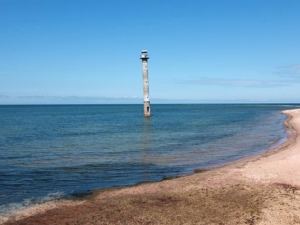
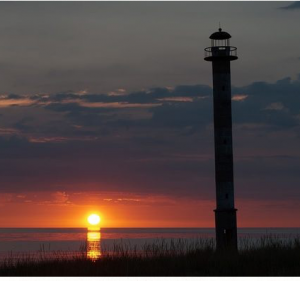
Here’s something you don’t see every day, courtesy of Atlas Obscura, one of our favorite websites. The Kiipsaar Lighthouse was built on solid land in 1933, but beach erosion has put it off shore. Check before going to visit. It leans and may well collapse before you get around to visiting Saaremaa, Estonia.
Lawyer-Client Privilege Protects Us All
Posted by Cliff Tuttle| April 11, 2018 | © 2026
No. 1,465

Alan Dershowitz
Image: Washington Examiner
Today will be the second day of testimony by Mark Zuckerberg before a Senate committee regarding the privacy rights of Facebook users in particular and internet users in general. It is an important issue and ought to be explored. Whether the users of Facebook are or should be entitled to privacy for the information they place on their Facebook accounts is a legitimate subject for discussion.
Without appearing to trivialize the information that has been recorded in Facebook, it must be pointed out that this medium is not intended for the communication of secrets. It contains personal information, much of which is trivial. By now, it should be apparent to all that information placed on Facebook can often be accessed by hostile individuals posing as friends. A good rule of thumb is to post nothing that you wouldn’t broadcast to the public. A better one is to avoid Facebook entirely.
This is one reason why I have long taken the position that lawyers should never open a Facebook account. Potential or existing clients may communicate privileged information which is impossible to protect. They can do it by asking a question before the lawyer has a chance to wave off the communication. The confidential nature of the information may not be evident to either party at the time.
While a firestorm rages around the use of personal information voluntarily given on an insecure website, a much more serious issue is being raised by the raid on the office, home and hotel room of the President’s personal attorney. This was accomplished after a judge heard argument by the Special Counsel, in private, that there was probable cause that such a raid would produce evidence of a crime. Of course, this was all done in secret, so we will not immediately know what was presented to the court. Meanwhile, the Special Counsel has seized a treasure trove of documents, most of which have nothing to do with the Special Counsel’s mission. If it is later determined that the information was seized illegally, it will nevertheless be known to prosecutors, police and perhaps to the public.
This should scare the hell out of everybody. In the long view, it doesn’t matter who is the target of such an investigation. Next time, it could be any of us. As Harvard Law Professor and civil liberties advocate Alan Dershowitz concludes in his article in The Hill, this creates a precedent that is a loaded gun laying about that can be used against others in the future.
Lawyers must have the ability to protect clients and clients must have the confidence that information protected by lawyer-client privilege will remain safe.
CLT
Tags: Civil liberties > Facebook > Fourth Amendment > Special Counsel
Welcome
CLIFF TUTTLE has been a Pennsylvania lawyer for over 45 years and (inter alia) is a real estate litigator and legal writer. The posts in this blog are intended to provide general information about legal topics of interest to lawyers and consumers with a Pittsburgh and Western Pennsylvania focus. However, this information does not constitute legal advice and there is no lawyer-client relationship created when you read this blog. You are encouraged to leave comments but be aware that posted comments can be read by others. If you wish to contact me in privacy, please use the Contact Form located immediately below this message. I will reply promptly and in strict confidence.
Recent Posts
- Sheriff Sales in the COVID-19 Era
- MORTGAGE FORECLOSURE: Cares Act creates gigantic opportunity for borrows under federally-backed and owned mortgages.
- PA Appellate Courts Schedule Arguments Using Electronic Media
- US Supreme Court holds that juries must render unanimous decisions in state criminal cases
- Signs of the Times — the future shortage of dentists.