Proud Member of the Rapid Response Team for:

Click Here To Learn More About How You Can Help
Or
Call 412-378-8779
Categories
- 2012
- 2013
- 2016
- 2017
- 2018
- Advertising
- Advocacy
- Amazing!
- Appellate Practice
- Apps for Lawyers and Others
- AVVO Answers
- Bankruptcy
- Blawging
- Business
- Casa San Jose
- Case Update
- Christmas!
- Civil Litigation
- Civil Rights
- Civility and Courtesy in the Practice of Law.
- Congressional Redistricting
- Constitutional Law
- Construction Law
- Consumer Protection
- Contract Law
- Coronavirus
- Courthouse Scenes
- COVID-19
- Credit Card Collection Litigation
- Criminal Law
- Cyber security
- Decision making
- Employment Law
- Encore Post
- Environmental Law
- Estates and Trusts
- Ethics
- Evidence
- Fair Housing
- Fake News
- Family Law
- Fifty Years Ago
- fracking
- Future of the Law
- Great Lawyers
- History
- Holidays
- How to . . .
- Humor and Satire
- Immigration
- insurance
- Jack Sez
- Landlord and Tenant law and litigation
- Lawyering
- Legal Education
- Legal Ethics
- Legal History
- Legal Marketing
- Legal Technology
- Legal Writing
- Life Affirmation
- Life on the Internet
- Links
- Milestones
- Mortgage Foreclosure
- News Commentary
- Oil and Gas
- On line chicanery
- On-line Security
- One Hundred Years Ago
- Oriegate
- Orphan's Court Practice
- Personal Privacy
- Personal Productivity
- Phishing
- Pittsburgh
- Pittsburgh Legal Back Talk
- Pittsburgh Legal Community
- Pokemon Litigation
- Politics and Government
- Post September 11
- Practice of Law
- Privacy
- Property Assessments
- Real Estate
- Real Estate Contracts
- Reassessment 2012
- Retweets
- Right to Reputation
- SCOTUS
- Screenshots!
- Security and Privacy
- Senior Lawyers
- Seven Foundations of Time Mastery for Attorneys
- Signs of the Times
- Solo by Choice: The Review
- Tell Us Something . . .
- Ten Years of Pittsburgh Legal Back Talk
- Tenth Anniversary
- Tenth Anniversary Year of PLBT
- The continuing American Revolution
- the Review
- trademark and service mark
- Trends in the Law
- UTPCPL
- Vocabulary Word of the Day
- Weekend Book Review
- Winners and Losers
- Words Lawyers Use
- Workers Compensation
- Zoning
Witch hunts are as American as Apple Tarts.
Posted by Cliff Tuttle| August 20, 2015 | © 2026
No. 1,203

Image: nypost.com
Three people can keep a secret, Ben Franklin once wrote, if two of them are dead.
And when the secret inevitably is revealed . . .. as Ricky used to say to Lucy, somebody has a lot of ‘splaining to do.
Maybe so, but not to us, the public. Whether somebody’s email address and credit card appears in Dolly Madison’s (or whoever she is) website is none of our business.
So take the pledge with me that you won’t read or listen to gossip about that stuff.
I thought you wouldn’t. Oh well, take heart. You’re gonna be in good company.Unless, of course, somebody stole your identity. ‘Splain that to a gloating world.
Witch hunting is a long-standing American tradition. We’ll drag ’em out in the street, put ’em in stocks and throw a lot of rotten fruit and vegetables at them.
And what about the hackers who caused all this? What are we going to do to them? Nothing.
And one fine day, they’ll come after the rest of us.
CLT
Yes, Virginia, it is possible to work yourself to death in Pennsylvania.
Posted by Cliff Tuttle| August 20, 2015 | © 2026
No. 1,202
ROBERT DIETZ (DECEASED) BY JUDITH DIETZ v. WORKERS COMPENSATION APPEALS BOARD, No. 2051 C.D. 2014 , decided August 14, 2015.

Image: dyer law.com
Robert Dietz was one of those unfortunate souls you see out in the cold weather repairing utility lines while you pass by in your warm comfortable car. He was a jackhammer operator on a water line repair crew. On the day/night in question he went to work at about six AM and was still at work at about 9:30 PM, when he had a heart attack and died.
The issue was whether his widow was entitled to benefits. In order to be entitled to benefits, Mrs. Dietz had to prove a causal link between the work he was doing and his death. There was medical testimony that there were multiple causes, smoking, pre-existing medical conditions, cold weather, stress, etc. The company’s medical witness testified that it was only a matter of time before Dietz had a heart attack and that it could have happened while he was reading a book at home or asleep. Moreover, it was not known whether Mr. Dietz was actually jackhammering when the heart attack occurred, or perhaps taking a smoking break.
The case went up the Worker’s Compensation appeals ladder and then down on remand, and back up where in landed, after 8 years, in the Commonwealth Court. The Court found that the death was work related and thus compensable, noting:
Is it Unconstitutional to Make Sleeping in Public a Crime?
Posted by Cliff Tuttle| August 17, 2015 | © 2026
No. 1,201
Here’s a very interesting article from Jurist, the Pitt Law School publication that follows legal news around the world.

Image: clatt.com
The Justice Department is attacking a Boise City ordinance that prohibits slewing in public. Since everybody has to sleep, it is argued, this makes it a crime to be homeless. The article gives a review of cases involving “status offenders.” It may be a crime to offer to provide sex for money, but it cannot be a crime to be a prostitute.
CLT
From the Archives: Philadelphia’s Mortgage Foreclosure Diversion Program — July 2008.
Posted by Cliff Tuttle| August 15, 2015 | © 2026
No. 1,200
In order to celebrate Post No. 1,200, I am reprinting one of the first posts I wrote in this blog, dated July 21, 2008. At the time, the effects of the mortgage bubble collapse were being felt, including in Pittsburgh. Hundreds of mortgage foreclosure actions were being filed followed by default judgments in about a month. Philadelphia pioneered a program for putting the brakes on in order to determine whether modifications were possible. Allegheny County eventually followed suit. On April 16, 2009, PLBT reported: “The first mediation conferences under the Allegheny County Court of Common Pleas pre-foreclosure program were scheduled to begin last week, although some were postponed due to court closings for the memorial service for the three slain police officers. Judge McCarthy was scheduled to hold conferences in the morning and Judge James in the afternoon. The conferences, according to a report from an attorney involved in numerous cases, are to be held in chambers, not in open court.”
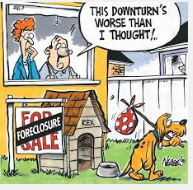
Image investorvillage.com
Here is my July 21, 2008 post:
On July 17, 2008, Philadelphia’s Court of Common Pleas adopted a Joint General Court Regulation to provide for conciliation conferences for owner-occupied residential properties facing sheriff sale.
The first cases to be conciliated will be those scheduled for sheriff sale in August and September. Because it is difficult to identify owner-occupied residential properties with certainty, all of the sheriff sales in August and September are being postponed to November and December unless the plaintiff’s counsel files a certificate stating that the property is not an owner-occupied residence by a fixed deadline. The plaintiff’s attorney must then send a document identified as the “Important Notice” to the Defendant, to give the Defendant an opportunity to file an “Objection.” Cases scheduled for Sheriff Sale in earlier months and not yet sold are eligible for conciliation if the defendant complies with the requirements of the regulation.
Cases where the complaint is filed on or after September 8, 2008 involving owner-occupied residential properties will be given a special designation and the conciliation is scheduled immediately after filing. If an owner-occupied residential property is not so-marked by the plaintiff’s attorney, the defendant can file a written request for a conciliation conference up to 10 days before the sheriff’s sale.
Other cases filed before September 8 will be conciliated if the homeowner files a certification and request for conciliation.
Meanwhile, an organization called Philadelphia Foreclosure Rescue Effort has been recruiting volunteer attorneys to give free representation to homeowners at conciliation conferences. The attorneys are given two and 1/2 hours of free training, with an optional additional hour of mortgage foreclosure defense training.
Will this work? Conciliations do produce settlements — provided that both parties are motivated. In cases where default judgments and writs of execution have been entered, there would seem to be little motivation for the plaintiff to settle. The options left to the defendant are not very many at that point. Moreover, the defendants have often become so delinquent by this time that there is no real prospect of rescue. On the other hand, plaintiffs have begun to worry about the threat of federal and state legislative action. They may not wish to look like they are not negotiating in good faith. Also, the prospect of doubling and tripling the inventory of real estate owned (REO) properties now looks very real.
But conciliations scheduled at the time complaints are filed may be very beneficial to both parties. The defendant may only be 90 – 120 days delinquent. The defendants have been paired up with lawyers who would be quite happy to file a response to the complaint if the negotiations do not pan out. Before then, 95% of them would have permitted default judgment.
Is Allegheny County considering its own mortgage foreclosure conciliation program? Would Philadelphia’s be a suitable model?
CLT
– See more at: https://www.pittsburghlegalbacktalk.com/archives/8#sthash.IZdvvG2P.dpuf
Tags: mortgage foreclosure > mortgage modifications > Philadelphia diversion program
Why Blog? 10.5 Reasons.
Posted by Cliff Tuttle| August 14, 2015 | © 2026
No, 1,199
itworksonmymachine.net
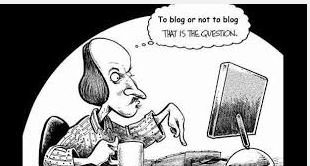
As we are about to hit 1,200 posts, its about time to reprint this post from June 11, 2009. It is one of the best.
Lawyers are often advised by marketing professionals to blog because it is good marketing. The AVVO blog recently announced an inexpensive and easy to use blogging vehicle for lawyers. If you have a modest marketing budget, investing in a blog will buy you more effective advertising than any other vehicle, including Google pay per click ads.
But if a lawyer never lands a single new client from blogging, the exercise is still worthwhile. Here are 10.5 reasons why:
1. Self education. In order to write a blog piece you need to read and find out what’s going on in the law and in the world. Doesn’t continuous self-education make a better lawyer?
2. Reinforcement of learning. The best way to remember newly-acquired information is to use it. The best way to really understand a concept is to explain it. Blogging forces you to do both.
3. Getting away from the old me-me-me. The essence of a law firm website is telling potential clients how great you are. That can get tiresome — with legal advertising websites rivaling the leading sleep aids for induced drowsiness. A blog looks outward at the world, not inward at the firm.
4. Practice makes perfect. If you wish to be a persuasive and polished writer, you must practice.
5. Busman’s Holiday. It is surprising how relaxing it can be after a day of toil to write something. You may not think so until you start to really get into writing your blog. Meanwhile, you are thinking and writing about work related matters.
6. Making Friends and Influencing People. Through your blog (assuming you are diligent and have good content) I guarantee that you will make the acquaintance of people worth knowing. They will consider you smart, informed and very persuasive — otherwise, they wouldn’t be reading your blog.
7. The Bully Pulpit. When you have a gripe, a beef or a strongly-held opinion, shazam! You have a forum!.
8. Developing New Expertise. All that reading and writing, scrounging for topics and keeping your ear to the ground to identify advancing trends, will cause you to develop and expand expertise on new topics. Moreover, you don’t have to tell anyone you know something about a field of the law, your blog does.
9. Developing a Portfolio. All the posts you ever wrote will be on the internet for a long time. You’ll receive comments popping up on posts written many months or even years ago — ones you’ve actually forgotten you wrote. You’ll find yourself saying to people: “Read my blog post(s) on the subject.”
10. Self fulfillment. You will feel a sense of accomplishment when you post something really good.
10.5 Strange as it may seem, you could be a force in someone else’s life. Someday, if you are lucky, someone will write to you or tell in person that you helped changed his or her life. Teachers often hear it years later from students. When you blog, you are the teacher and who knows who the student may be?
CLT
Tags: blogging > Legal blogging > the benefits of blogging > the joys of blogging > why blog?
Why Does Anyone Like Donald J. Trump?
Posted by Cliff Tuttle| August 10, 2015 | © 2026
No. 1,198

Image: obamaconspiracy.org
Everybody knows at least one person just like that big blow-hard Donald J. Trump. Self-absorbed. Insults people. Behaves in a flamboyant and unguarded manner. But nobody likes such a person. And when he is someone with power over you, life can be nearly intolerable.
So why does anyone like Donald J. Trump?
Good question. Some have tried to answer it by suggesting that his followers think just like him. Maybe, but I have another idea.
I have known a few lawyers who share Trump-like qualities. They often tyrannized over their secretaries and subordinates. They can be bombastic at the drop of a hat. They make enemies with ease. Yet, strangely, clients frequently thought that they were fantastic lawyers.
These clients equated the bull-in-china-shop style with being a rough and tumble, two-fisted winner. They often expressed the belief that best lawyers are bulldogs who chomp down on an opponent’s leg and never let go. In other words, you can get your way (or your client’s way) by being a bigger bully than the next guy. Lawyers have word for that kind of character — Rambo. And that denomination is not, I assure you, an expression of admiration.
The biggest problem with Ramboism is that judges don’t abide bullies acting up in their courtrooms. And they usually know exactly how to tame the savage beast. You can’t bully the judge. You have to persuade him.
We have a lawyer marketing program around here called Gorilla Lawyer. Their logo is a big, mean (and dumb looking) gorilla wearing a shirt and tie. This caricature didn’t look like a lawyer to me. It looked like a gangster.
Some people want to hire a trump-like lawyer to bully their opponent. I suppose the same people want a Trump-like President, to bully the Mexican Government or who knows who else?. At least for now. Some of them will get tired of the novelty. Some will eventually figure it out. And some will become the target of the next wave of insults.
CLT
Does UTPCPL Apply to Real Estate Sales?
Posted by Cliff Tuttle| August 9, 2015 | © 2026
No. 1,197
BENNETT v. A.T. MASTERPIECE HOMES, 40 A.ed 145, 2012 Pa. Super. 60 (2012).
SCHWARTZ v. ROCKEY, 593 Pa. 536 (2007)

Image: sanantoniorealestate365.com
At the present time, it is firmly established in case law that the Unfair Trade Practices Consumer Protection Law, 73 P.S. § 201 et seq. may be applied in real estate transactions. The case most often cited for this proposition is Gabriel v. O’Hara, 368 Pa. Super. 383, 534 A.2d 488 (1987).
In the 2012 case of Bennett v. A.T. Masterpiece, supra, the Superior Court affirmed an award of exemplary damages and attorneys fees to the purchasers of a new home from a custom builder. During the course of construction, the purchasers walked through the construction site with the construction manager, who also owned the company, and pointed out various defects in the unfinished structure. The construction manager/owner replied, on several occasions, “I’ll take care of that,” or similar statements.
Although the construction manager/owner argued at trial that these were vague “figures of speech”, signifying nothing, the court interpreted them to be warranties and imposed UTPCPL liability upon both the company and personally on the construction manager/owner.
While the application of UTPCPL to real estate transactions is well-established, a blog post by Robert j. Foster, an attorney with Reger Rizzo Darnell LLP, has suggested that the Supreme Court has signaled that it disagrees in a footnote in Schwartz v. Rockey, supra.
Note 15 states: “There is no issue presented in this limited appeal concerning Buyers’ standing to invoke this statute, since they are complaining of loss in connection with their purchase of real property, as opposed to the purchase of goods and services.”
Since the Seller did not raise this standing issue, the Supreme Court did not consider it. And despite the invitation to do so, no one has argued it to the Supreme Court in the ensuing in the past eight years. A. T. Masterpiece Homes could have done so, but didn’t. Of course, it would have had to raise it in post-trial motions, suffered defeat before the Superior Court, and raise it in a petition for allocatur.
The following is a statement of the argument A. T. Masterpiece Homes might have made to the Supreme Court.
UTPCPL grants authority to both the Attorney General and private litigants. The authority of the private litigants is more narrow than that of the Attorney General and does not include the power to sue sellers of real estate.
Section 2-201-2(3), the Definition of Trade and Commerce, explicitly includes real estate transactions:
“‘Trade’ and ‘Commerce’ mean the advertising, offering for sale, sale or distribution of any services and any property, tangible or intangible, real, personal or mixed, and any other article, commodity, or thing of value wherever situate, and includes any trade or commerce directly or indirectly affecting the people of this Commonwealth.” [Emphasis supplied]
Section 2-201-2(4) goes on to enumerate 21 specific examples (in subsections i through xxi) of “unfair methods of competition” and “unfair and deceptive acts or practices” addressed by the statute.
These two sections are then applied in Section 201-3, which enumerates unlawful acts and practices:
“Unfair methods of competition and unfair or deceptive acts or practices in the conduct of any trade or commerce as defined by subclauses (i) through (xxi) of clause (4) of section 2 of this act [§ 201- 2(4) (i-xxi)] and regulations promulgated under section 3.1 of this act [§ 201-3.1] are hereby declared unlawful. . . .”
However, Section 201-9.2, Private Actions, does not include the right to sue under UTPCPL in real estate transactions:
“Any person who purchases or leases goods or services primarily for personal,family or household purposes and thereby suffers any ascertainable loss of money or property, real or personal, as a result of the use or employment by any person of a method, act or practice declared unlawful by section 3 of this act [§ 201-3], may bring a private action, to recover actual damages or one hundred dollars ($100), whichever is greater.” [Emphasis supplied]
Thus, while the scope of statute as a whole includes real estate, it only authorizes purchasers of goods and services, not real estate, to bring a private action. Presumably, the Attorney General could bring an action involving a real estate transaction, but not a private litigant. Or so the argument goes.
On the other hand, the Superior Court, when faces with a similar problem, construed another section of UTPCPL liberally to permit private litigation. In Cavalini v. Pet City, 848 A.2d 1002, the Superior Court recently held that the right of private action under the Dog Purchaser Protection provisions of UTPCPL had been intended by the legislature, despite language that delegated enforcement powers to the Attorney General and did not mention a right of private action.
“We find the legislature did not intend to create an inconsistency between the proviso;ns of 73 P.S.§§ 201-9.2 and 201-9.3 concerning the rights of consumers to pursue private actions under the UTPCPL. Thus, we find the trial court did not err in permitting a private cause of action pursuant to the Dog Provisions of the UTPCPL. Further, we find the exclusive enforcement powers given to the Office of the Attorney General in 73 P.S. § 201-9.3(h) are limited to the civil penalties outlined in 73 P.S. § 201-9.3(h)(2), similar to the remedy in the general provisions of the UTPCPL at 73 P.S. § 201-8.”
CLT
Real Estate: Don’t TRID on Me.
Posted by Cliff Tuttle| June 5, 2015 | © 2026
No. 1,169

Image: An imaginative ad for compliance webinars by elliemae.com
If it applies to you, you have heard plenty about TILA-RESPA Integrated Disclosure (TRID). Be advised that you will undoubtedly hear a lot more before August 1 — the day of implementation. And you have probably heard about the so-called grace period — whereby the feds at CFPB are giving lenders and closers a little bit of slack on the enforcement. Good luck on that.
This essentially completes the process, which has been going on for over twenty years, whereby ordinary real estate lawyers who do not work for lenders or operate settlement services have been systematically excluded from closing residential real estate transactions involving federally-related loans. This is too bad, because we lawyers know a few things about real estate law that non-lawyers don’t.
When CFPB came on the scene with the Obama Administration and started experimenting with combining disclosures under the Truth in Lending and the Real Estate Settlement Procedures Act, it expressed the goal of streamlining the real estate settlement process and making disclosures easier to understand and less complicated. Guess what?
Aw shucks, you guessed!
Real estate settlements are increasingly focused on procedural and disclosure matters. Thats the arena where lots of mistakes will be made. In a few years, issues regarding TILA-RESPA disclosure requirements, the new settlement procedures and the like will start flooding into court. So don’t feel too sorry for lawyers.
That isn’t to say that an ordinary real estate lawyer can’t learn the new rules and play the game. We can, but very few of us will. Those who do will, of necessity, do little else and will be more than ever dependent upon well-trained staff, software and coordination with lenders. Of course, there will still be cash deals to close as well as commercial and other non-residential closings.
That having been said, if you are eager to close residential loans, you need to start studying. Here are a few bulletins that my title insurance company passed along.
Wells Fargo Settlement Agent Newsletter June 2015
The UTPCPL Catch-all Provision and Common Law Fraud.
Posted by Cliff Tuttle| May 27, 2015 | © 2026
No. 1,160
FAZIO v. GUARDIAN LIFE INSURANCE COMPANY OF AMERICA, 62 A.3d 396 (Superior Ct., 2012)

Image: onewayonly.net
The Unfair Trade Practices and Consumer Protection Law (UTPCPL) contains 20 specifically enumerated sections where its provisions apply and one “catch-all” provision. The catch-all provision is set forth in 73 Pa.S.A. § 201-2(4)(xxi).
“The pre-1996 catchall provision”, said the Superior Court,” prohibited ‘fraudulent conduct’ that created a likelihood of confusion or misunderstanding. In 1996, the General Assembly amended the UTPCPL and revised Section 201-2(4)(xxi) to add ‘deceptive conduct’ as a prohibited practice. The current catchall provision proscribes ‘fraudulent or deceptive conduct which creates a likelihood of confusion or of misunderstanding.’
Under the pre-1996 language, referring only to “fraudulent conduct,” Pennsylvania Courts required proof of all of the elements of common law fraud to state a claim under the catch-all provision. After the amendment, these courts continued to require that the elements of common law fraud be plead and proven. Pre-amendment cases were cited to justify the continuation of this requirement.
However, in a series of cases, the Commonwealth Court began to question whether this interpretation was correct. In Commonwealth v. Percudani, 825 A.2d 743 (Pa. Cmwlth. 2003) , it stated that the “Superior Court has failed to provide any rational basis for its continuing restrictive view of the Law.” In Percudani, the Commonwealth Court concluded that the Commonwealth had sufficiently plead “deceptive conduct” and that it was not necessary to plead all of the elements of common law fraud.
In Fazio, the Superior Court reviews a series of cases, mostly in the federal courts, that recently held that proof of common law fraud was not required and concludes:
“Notwithstanding prior case law on the catchall provision, our review of decisions from the Commonwealth Court, the federal courts interpreting Pennsylvania law, as well as the statutory language of the post-amendment catchall provision leads us to conclude the court’s jury instruction regarding ‘misleading’ conduct accurately set forth the standard of liability under the amended catchall provision.”
In a lengthy discussion of cases holding to the contrary, this court distinguishes or otherwise disposes of all. While this case addresses other issues, the firm rejection of the common law fraud requirement is the most important.
Appellants in this and other cases have brought petitions for allowance for appeal to the Supreme Court without avail.
CLT
Nice Guy He Wasn’t!
Posted by Cliff Tuttle| May 15, 2015 | © 2026
No. 1,153

Who was this Guy?
Image: jorvik.co.uk
Is it possible that the common usage of the word “guy” has its origins with Guy Fawkes? So says Eugene Volokh, of Volokh Conspiracy fame. It takes one conspirator to know another one.
What is “kinesophobia?” Is it the same thing as “kinesiophobia?” What do these terms have to do with the word “haptic.” or “haptics?” Yes, there are some ancient Greek word roots here.
Do you know the difference among “black hat”, “white hat” and “grey hat?” No, a “red hat” is something different.
Have you been guilty of “slacktivism”? Should you be ashamed?
Should you “kvell” or “kvetch”over the quality of your “kvass”?
What is the world’s most recognized word — according to the editors of the Merriam-Webster Dictionary? No, the answer is not “guy”, but that’s okay.
CLT
Welcome
CLIFF TUTTLE has been a Pennsylvania lawyer for over 45 years and (inter alia) is a real estate litigator and legal writer. The posts in this blog are intended to provide general information about legal topics of interest to lawyers and consumers with a Pittsburgh and Western Pennsylvania focus. However, this information does not constitute legal advice and there is no lawyer-client relationship created when you read this blog. You are encouraged to leave comments but be aware that posted comments can be read by others. If you wish to contact me in privacy, please use the Contact Form located immediately below this message. I will reply promptly and in strict confidence.
Recent Posts
- Sheriff Sales in the COVID-19 Era
- MORTGAGE FORECLOSURE: Cares Act creates gigantic opportunity for borrows under federally-backed and owned mortgages.
- PA Appellate Courts Schedule Arguments Using Electronic Media
- US Supreme Court holds that juries must render unanimous decisions in state criminal cases
- Signs of the Times — the future shortage of dentists.