Posted by Cliff Tuttle| October 17, 2014 | © 2026
No. 1,112

Image: trendinbuffalo.com
Fantasy football has been around for a while. Rules vary. In the classic format, the team owners meet at the beginning of the pro football season to draft teams of offensive players expected to do a lot of scoring. These teams usually continue to play for the entire season, with the winner taking the pool at the end. However, commercial variations have developed that enable individuals to play by the day or the week, without the need to assemble an entire league. And even the cable sports networks, such as ESPN, have joined in.
The question is, does this constitute illegal gambling? In Pennsylvania, probably not.
In Pennsylvania, as in most (but not all) States, the test whether such a game is illegal gambling is whether it is predominantly one of chance or skill. The last time a Pennsylvania appellate court addressed the issue of chance v. skill was in a 2010 Superior Court decision, Commonwealth v. Dent, 992 A.2d 190. Although Poker, in its various forms, involves substantial skill, the Superior Court held that chance predominates because the cards dealt to each player have the primary role in determining the outcome of the hand.
Whether Fantasy Football is predominately a skill game has never been directly addressed by Pennsylvania appellate courts. However, the prevailing view is that picking a Fantasy Football team is a game of skill. Organizations that permit you to play fantasy football over the internet, have determined that the game is legal in our Commonwealth. Mark Edelman, who is something of an expert, explains the reasoning in an article in Forbes. On its website, FanDuel, a popular internet fantasy site explains how it determines which states are safe to offer the game.
However, if the games are changed to incorporate more chance elements, such as payouts that are based on total scores of actual games in the NFL prosecutors may decide to take another look.
CLT
Posted by Cliff Tuttle| October 15, 2014 | © 2026
No. 1,111
William Towne v. Sensible Home Warranty, LLC, Pittsburgh Legal Journal, Vol. 162 No. 20 page 314. AR 12-6409. June 3, 2014.

Image: douglaswhaley.blogspot.com
This case involves a claim made under a home warranty which provided that a warranty dispute must be submitted to the American Arbitration Association in Washoe County, Nevada, the location of the defendant’s office. After a bench trial, the court awarded damages to the plaintiff, together with exemplary damages and attorneys fees under the Unfair Trade Practices and Consumer Protection Law (UTPCPL) The Defendant filed post trial motions, then withdrew them and appealed to the Superior Court on grounds that the trial court should have ordered AAA arbitration at some location other than Nevada.
Under the Rules, Judge Alan Hertzberg, the trial judge, prepared an opinion explaining his reasoning to the Superior Court.
In his opinion, Judge Herzberg stated:
“A term of a contract “is unconscionable, and therefore avoidable, when there was a lack of meaningful choice in the acceptance of the challenged provision and the provision unreasonably favors the party asserting it.” Salley v. Option One Mortgage Corp., 592 Pa. 323, 925 A.2d 115 (2007). The warranty Sensible provided Mr. Towne is a standardized contract form offered to consumers of goods and services on a ‘take it or leave it’ basis. See Black’s Law Dictionary (5h ed. 1979). Accordingly, it cannot be disputed that Mr. Towne lacked a meaningful choice. See Denlinger, Inc. v. Dendler, 415 Pa. Super 164 at 174-175, 608 A.2d 1061 at 1066-1067 (1992).
The arbitration clause in Sensible’s warranty also unreasonably favors Sensible. Sensible offered no justification for a clause that discourages customers from initiating meritorious disputes with it (unless they are Nevada residents). The clause deters a customer in Pittsburgh, Pennsylvania by the expenses of travel and lodging and the time commitment for AAA arbitration in Nevada. It appears Sensible’s goal in having this clause in the warranty is to avoid disputes with customers without regard to whether or not they have merit. This is an improper goal. Therefore Sensible must not be permitted to have its choice of a forum, AAA, forced upon a customer with a meritorious dispute who chooses resolution via the court system. Additionally, the Nevada venue and the AAA forum are too closely connected for severance of one from the other. Together they comprise an arbitration clause that unreasonably favors Sensible and therefore is unconscionable.”
CLT
Posted by Cliff Tuttle| October 11, 2014 | © 2026
No. 1,110
 When a low income tenant appeals from the magistrate, the Department of Court Records gives him/her a pack of papers. One of them is intended for Section 8 tenants who only pay a portion of the rent. But other tenants fill in the blanks and sometimes get away with paying only part of the required escrow.
For example, suppose that the Magistrate found that the rent was $600.00. But the tenant reads the form, which asks what percentage of the rent is her share. She thinks: “Well, my boyfriend pays half, so my share is $300.00.”
And then, “per affidavit” Court Records lets her pay escrow based on a $300 share. This seems to be happening with increasing frequency.
So, what does a landlord do to set the record straight? Don’t bother arguing with the people at the Department of Court Records. Instead, it is necessary to file a motion to correct the escrow. In Allegheny County, such a motion goes to Judge Wettick. And if you haven’t done so already, its probably a good time to lawyer up.
CLT
Posted by Cliff Tuttle| October 9, 2014 | © 2026
No. 1,109

Last week at a conference, I was approached by a TMN reader who asked me, “Can you give me a quick tip to improve my time management?”
I felt like a comedian put on the spot with the cliché, “Say something funny…”
So, for those who want some “quick tips,” today I have a list of 10 Quick Time Management Tips…
10 Quick Time Management Tips
As much as I talk about time management, productivity, technology, and goals, it can be difficult to give a “quick tip” to improve your productivity.
There are no silver bullets. After all, everyone’s life, job, and circumstances are different.
However, just in case I get that question again…
Here are 10 Quick Tips to Improve Your Time Management:
- Plan Your Day – The single best thing you can do to boost your productivity is to plan your day before leaving the house. Less than 10% of individuals do this, so start your day ahead of the pack.
- Block Your Time – Block time on your calendar for your work. Otherwise your calendar will be nothing more than a schedule for other people’s priorities. Make appointments with your tough tasks to ensure you have time to get them done.
- Get Out of Your Inbox – Email is not your job! (Unless you work in customer service…)Get out of your email inbox and get your real work done. Close your email client when you are not working in it. Your email will still be there when you return.
- Say NO When Appropriate – Saying NO is a learned skill. Whether it is to meetings, taking on others’ responsibilities, and more… you need to be able to say NO when necessary.
- Always Do Your Most Important Work First – Life has a way of surprising you. Don’t let the unexpected derail your important tasks. Always do your most important items first thing in the day. That way, no matter how hectic your day gets, you have already completed your top priorities.
- Don’t Answer the Phone – Don’t answer your phone if you are busy. It’s that simple. Your phone is there for your convenience, not the other person’s. Own your phone, not the other way around.
- Turn Off the Notifications – We rely on our technology more than ever, but we also let it interrupt our lives too often. If I went to your house and rang your doorbell constantly you would be upset. Yet, you are fine with your phone constantly ringing, chiming, and vibrating all day long. Turn off those notifications so that you can focus.
- Start and End Meetings on Time – This one takes discipline. Start the meeting on time and end it on time. Once you start doing this, you will set expectations with others. Be respectful of everyone’s time in the meeting.
- Make Decisions and Live with Them – This one may sound philosophical, but we have conditioned ourselves not to make decisions. The irony is that life is all about choice.Make your decisions and enjoy the journey. A good decision now, always beats a perfect one later.
- Have Goals and Pursue Them Daily – There has been much buzz in recent years from the “No Goals” camp. Yet, almost anything worth accomplishing requires long and dedicated effort. Set your goals and pursue them with discipline every single day.
Posted by Cliff Tuttle| October 6, 2014 | © 2026
No. 1,018

Image: jmacommercialservices.com
One of the nicest, kindest things a lawyer or any professional can do is to use his/her knowledge to refer a friend in need to the right specialist. You hear the story, it clicks and although you cannot help, you know someone who can.
Yet, every time I see a certain TV commercial, which also has a radio version, my blood runs cold. In it, a newcomer gets a call from her local health insurance “concierge” welcoming her to town. She appreciates the call. But then, the conierge offers to refer a new doctor. That, she declares in her thoughts, is really something.
Well, yes it is something. It is the old “nail down the business for our guys before it gets away” something. This person is not doing a fellow human being a favor. She is doing something she’s getting paid for — helping to fill up one of the the family medicine or pediatric practices owned by the hospital that owns the insurance company that hires the concierge. That’s real service. Self-service.
Maybe the practice has nice, conscientious and very competent doctors, the kind that anyone really in the know would recommend with gusto. Everything would be alright then, wouldn’t it?
Now, lets change the commercial just a little. The nice new neighbor thanks the concierge and says: “Why are you recommending this doctor? What do you know about her? What have you personally experienced that makes you want to recommend her?
Pass that test and maybe you should take the recommendation.
CLT
Posted by Cliff Tuttle| October 4, 2014 | © 2026
No. 1,107

Image: smchealth.org
There appear to be places around the country that already ban smoking in apartment dwellings.
The Allegheny County Housing Authority recently announced that it is banning smoking inside the building at 5 public housing locations. As the New York Times and many other publications have observed, this is a national trend.
Of course, some residents have expressed outrage and disbelief that the Constitution does not protect them from the prying eyes (or nose in this case) of the government in the sanctuary of their home. But the truth is, it is all a matter of contract. If the lease says you cannot keep a pet in the apartment, why not extend the same principle to smoking?
Smoking bans are not confined to public housing, of course. There are residential buildings that ban smoking in Pittsburgh and elsewhere — predominantly higher-end ones. Non-smoking apartment buildings are often sought out by renters who have severe allergies to smoke or lung conditions. One I know of not only evicts smokers, but gives offended non-smokers the right to terminate the lease if bothered by tobacco smoke. You wouldn’t think that occasional smoking in the next apartment would be readily detectable or provable. Seems logical, but just try it in a non-smoking apartment building.
A recent question posted on AVVO, poses this issue from the tenant’s perspective where the lease is silent. The questioner writes:
“Cigarette smoke triggers migraines for me, and it’s been miserable since the new tenants moved in. This is my 5th year living here, and I haven’t had any major issues until now. The apartment building has “No Smoking” signs on the doors from outside, but my landlord says it’s not in the lease so there’s nothing they can do. They tried to plug the space in the baseboard heating between the apartments (with packing blankets? seems like a fire hazard, but not my business), but it’s an old building and it seems that there’s only so much that they can do.
Am I stuck? I’m so tired of not being able to stay in my own home without getting sick.
I do have the emails in which I asked my landlord to address the issue & the responses where they said that they couldn’t do anything more, if that’s at all helpful. They suggested that I get an air purifier or light a candle; I had a humidifier with a filter, but one that was supposed to last 3 months lasted about 4 days before it was black. It also didn’t help terrifically, nor does the candle (it covers it up, which doesn’t help the migraine). I’m young (23) and have an auto-immune disease, so my health is something I try to protect as much as possible.”
I gave the following answer on AVVO:
” As a practical matter, you do not yet have a legal remedy. I say not yet, because the law is trending in this direction. Public housing projects around the country are banning smoking and I think that many private landlords will pick up on the idea.Nevertheless, if you are willing to do so, you could just refuse to pay the rent, forcing the landlord to commence eviction proceedings. Of course, you would have to have someplace lined up to move right away. Finding a smoke-free building may be difficult at the present time. Your landlord, like most, probably uses an older form lease that doesn’t have a smoking ban.Although there may be other legal avenues available, they will take too long and cost too much. By the time a non-landlord-tenant suit would come up for trial, the lease would have expired.”
Yes, you the tenant can always stop paying and be ready to move. But, not surprisingly, that is not the outcome that most tenants in similar situations expect. They want the landlord to evict the other tenant or make him stop smoking. The American Nonsmokers Rights Association is encouraging residential tenants to file lawsuits intended to do just that.
Pittsburgh and most other major cities passed ordinances decades ago banning smoking in restaurants, offices and other public places. Some states, including Pennsylvania, have followed. There are a growing number of statewide smoking bans outside Pennsylvania and some appear to apply to private apartment buildings. It is only a matter of time until the Pittsburgh City Council passes an ordinance banning smoking in private apartment buildings.
CLT
Posted by Cliff Tuttle| October 2, 2014 | © 2026
No. 1,106
 I have committed to present a new legal seminar on the Unfair Trade Practices Consumer Protection Law (UTPCPL). As in the past, this seminar is sponsored by CCAC and will probably be presented at the North Campus. The session, which will be from 6:30 to 9:30 PM on December 17, will be eligible for 3 hours of Pennsylvania Continuing Legal Education (CLE) credit.
I hope to present this seminar again in 2015 at a different CCAC location.
The UTPCPL was first adopted in 1968. However, its scope has been greatly expanded over the years by being linked to subsequent consumer protection statutes.
Typically, the last section of the new enactment will say that the violation of the new statute constitutes a violation of the UTPCPL. In addition, the UTPCPL is frequently plead in tandem with a wide variety consumer-related causes of action in order to justify exemplary damages, up to three times actual damages, and attorneys fees. For example, there were two federal cases decided in 2014 involving consumers who cited UTPCPL claiming title insurance companies overcharged for title insurance on refinances. We’ll explore this phenomenon in future blog posts and in the seminar.
Possibly the most important change in case law regarding the UTPCPL initially developed in the federal courts. Under the changes made in the 1989 amendments, it was no longer necessary to prove the elements of common law fraud to state a cause of action under the “catch-all” provision of UTPCPL.We’ll talk about that too.
If you are a civil litigator with cases that involve consumer issues, this is an area of the law that demands your attention. Although UTPCPL is almost 50 years old, it is emerging today as the most important consumer protection law in Pennsylvania.
CLT
Posted by Cliff Tuttle| September 29, 2014 | © 2026
No. 1,105 I haven’t read the AVVO law blog rankings for a while, so it was a pleasant surprise to see that PLBT had risen to number 152 among law blogs in number of visits. Not that my goal has ever been to have a high number, but it was depressing to see PLBT down in the 300’s — especially when it was being outranked by certain blogs that had shut down years ago. My goal has always been to provide an interesting discussion of interesting legal topics, with a Western PA emphasis. Rankings are not the goal, but its nice to be appreciated. Staying fresh is a problem for blogs of every kind. You can’t say the same thing over and over without becoming a crashing bore. In addition, you often can’t talk at all about exciting issues that you are in the process of litigating. Ethics, you know.

Mike Nifong
Image: thesmokinggun.com
I noticed that a venerable blog I often read stopped posting this July, Durham in Wonderland. Although it last posted in July, it still outranks PLBT on the AVVO charts by a few slots. This blog followed a single case, the criminal prosecution of the Duke University lacrosse team, starting in 2006, by now-infamous Durham NC DA Mike Nifong. When the evidence starting turning the other way, Nifong started manufacturing his own. And it eventually developed that he hid the key DNA evidence that exonerated the defendants. When the dust had finally settled, Nifong was disbarred. But the blog, Durham in Wonderland, went on and on. I had considered starting a similar one-case blog on Sandusky and its spin-offs. That might have worked out fairly well, since the legislation generated by the Sandusky case is voluminous and the the Penn State trials are still in the future. But I’m glad I never followed up on that. There would have been a lot work to put out such a publication. But I knew that that my heart wouldn’t have been in it. And that’s the secret to keeping it fresh. CLT
Posted by Cliff Tuttle| September 21, 2014 | © 2026
No. 1,104
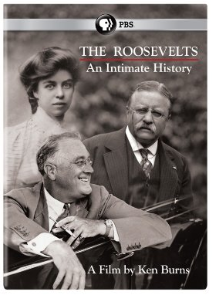 Making time to watch “The Roosevelts”, Ken Burns’ latest PBS production, for two hours every night for six successive nights required a certain amount of planning and self-discipline. For me, it was worth it.
Yes, it was about politics and policies — sometimes still controversial and still evoking strong emotion. But this was only a part of the message, the lesser part. This story is a saga of three people who overcame overwhelming personal obstacles by incredible, at times superhuman, effort. The story is a familiar one, but Burns manages to tell it with the same freshness that he evoked in other photo-based portrayals of American history.
Theodore Roosevelt was what they used to call a sickly child. He was also subject to overwhelming depression. His response was continuous, even frantic, activity, both physical and mental. After his young wife and mother died on the same day, he put a promising political career on hold to go west and become a cowboy. He rescued his sanity through unrelenting effort that challenged the limits of his endurance.
This formula for self-administered therapy was copied by Franklin and Eleanor when they each encountered seemingly unsurmountable physical and mental obstacles. As Burns and others have observed, there could never have been an FDR without TR.
It has long been noted that FDR followed TR’s career path, serving as an Undersecretary of the Navy and Governor of New York. But that was only one path, the lesser one. FDR went south to the polio rehabilitation resort Warm Springs, just as TR went west when disabled by depression. Eleanor, too, learned the lesson of redemption through unrelenting work from her favorite uncle.Her capacity for hard work and achieving goals made her the equal of both.
But the cure was never total or permanent. Each of them struggled with all of their might throughout life. “The Roosevelts” celebrates the triumph of the individual over forces that impede the achievements of our goals.
That is the real lesson of “The Roosevelts.” And it is applicable in every age and every life.
CLT
Posted by Cliff Tuttle| September 20, 2014 | © 2026
No. 1,103
This fine museum piece is also displayed in the basement of the Washington County Court House — next to the bubble gum machine and doctor’s office scale.

« go back —
keep looking »