Proud Member of the Rapid Response Team for:

Click Here To Learn More About How You Can Help
Or
Call 412-378-8779
Categories
- 2012
- 2013
- 2016
- 2017
- 2018
- Advertising
- Advocacy
- Amazing!
- Appellate Practice
- Apps for Lawyers and Others
- AVVO Answers
- Bankruptcy
- Blawging
- Business
- Casa San Jose
- Case Update
- Christmas!
- Civil Litigation
- Civil Rights
- Civility and Courtesy in the Practice of Law.
- Congressional Redistricting
- Constitutional Law
- Construction Law
- Consumer Protection
- Contract Law
- Coronavirus
- Courthouse Scenes
- COVID-19
- Credit Card Collection Litigation
- Criminal Law
- Cyber security
- Decision making
- Employment Law
- Encore Post
- Environmental Law
- Estates and Trusts
- Ethics
- Evidence
- Fair Housing
- Fake News
- Family Law
- Fifty Years Ago
- fracking
- Future of the Law
- Great Lawyers
- History
- Holidays
- How to . . .
- Humor and Satire
- Immigration
- insurance
- Jack Sez
- Landlord and Tenant law and litigation
- Lawyering
- Legal Education
- Legal Ethics
- Legal History
- Legal Marketing
- Legal Technology
- Legal Writing
- Life Affirmation
- Life on the Internet
- Links
- Milestones
- Mortgage Foreclosure
- News Commentary
- Oil and Gas
- On line chicanery
- On-line Security
- One Hundred Years Ago
- Oriegate
- Orphan's Court Practice
- Personal Privacy
- Personal Productivity
- Phishing
- Pittsburgh
- Pittsburgh Legal Back Talk
- Pittsburgh Legal Community
- Pokemon Litigation
- Politics and Government
- Post September 11
- Practice of Law
- Privacy
- Property Assessments
- Real Estate
- Real Estate Contracts
- Reassessment 2012
- Retweets
- Right to Reputation
- SCOTUS
- Screenshots!
- Security and Privacy
- Senior Lawyers
- Seven Foundations of Time Mastery for Attorneys
- Signs of the Times
- Solo by Choice: The Review
- Tell Us Something . . .
- Ten Years of Pittsburgh Legal Back Talk
- Tenth Anniversary
- Tenth Anniversary Year of PLBT
- The continuing American Revolution
- the Review
- trademark and service mark
- Trends in the Law
- UTPCPL
- Vocabulary Word of the Day
- Weekend Book Review
- Winners and Losers
- Words Lawyers Use
- Workers Compensation
- Zoning
On the Importance of Being First.
Posted by Cliff Tuttle| July 16, 2011 | © 2026
No. 650
 What is the difference between being first and being second? Luck usually.
LeBron James took the Heat to the NBA Championship and declared himself and his team a failure because they lost. Perhaps they were and he was, but not because they lost. LeBron was a failure because he said so.
The Pittsburgh Pirates spent, how many? — eighteen seasons on the bottom of the heap. Yesterday, on the first day after the All Star Game, they were tied for first place for one day. Perhaps it will not happen again all season. Perhaps it will not happen again for years. But would that make them a failure? Not hardly.
Being first is overrated. Being good, truly good, at what you do cannot be overrated. First is wonderful. But if you consider yourself to have failed because someone else came in first you deprive yourself of the pride in excellence.
Clint Hurdle told the team not to concentrate on the standings, but to focus on winning each game, one at a time. From what I can see, the 2011 Pittsburgh Pirates are not in danger of falling into the LeBron James trap. And neither should we.
CLT
Tags: Clint Hurdle > LeBron James > Miami Heat > Pittsburgh Pirates
Carlota Bohm tentatively named Bankruptcy Judge
Posted by Cliff Tuttle| July 13, 2011 | © 2026

No. 649
A merit selection committee has tentatively named Pittsburgh attorney and Chapter 7 Trustee Carlota Bohm of Houston Harbaugh as Bankruptcy Judge in the Western District of Pennsylvania, subject to public comment until August 5.
CLT
Casey Anthony Verdict: Give Credit Where Due.
Posted by Cliff Tuttle| July 13, 2011 | © 2026
No. 648
 After the Casey Anthony verdict, all the talking heads on cable and other media types could do was to criticize the prosecution for not making its case. Wonderful. That assumes that there was a case to be made. Is it possible, just possible, that defense counsel may have had something to do with the outcome?
No wonder Casey’s attorney is so hostile when confronted by the press in a restaurant.
CLT
Tags: Casey Anthony
Fiftieth Anniversary of “Tossin’ and Turnin'”.
Posted by Cliff Tuttle| July 11, 2011 | © 2026
No. 647
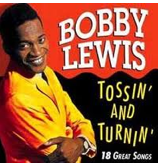 Rock and roll singer Bobby Lewis came through Pittsburgh briefly this weekend, on his way to perform in a concert in Folansbee WV. On July 10, 1961, fifty years ago yesterday, his hit song “Tossin’ and Turnin'” hit number one and stayed there all summer — ten weeks. It sold three million copies, was the top selling song of 1961 and was later included in the soundtracks of films “American Graffiti” and “Animal House.”
At 82, Bobby is still in fine voice. Bravo! Encore! Encore!
One Thousandth Follower on Twitter: Thr!ve Marketing.
Posted by Cliff Tuttle| July 6, 2011 | © 2026
 No. 646
 ON THE EVE OF THE THIRD BIRTHDAY OF PITTSBURGH LEGAL BACKTALK, OUR ONE THOUSANDTH FOLLOWER, THR!VE MARKETING OF CHANDLER AZ LOGGED IN.
Thank you , @Christie Turley, principal at Thr!ve, for following my blog. And thank you to readers and followers all!
CLT
Group Therapy
Posted by Cliff Tuttle| July 6, 2011 | © 2026
No. 645
It seemed like a great idea, joining all those groups on Linked In. Now I get email even during holidays at times when everybody should be having a picnic with family.
The discussions range from trivial to absurd to self-serving to intermittently informative. The most popular ones involve giving each other (or newbies, or wannabes) advice. “When do you run, not walk, from a client?” was a popular one. It ran for months and months beyond its shelf life expiration date, with all the same advice eventually being repeated in an endless loop.
My favorite was the post asking the members whether they agreed with him that Lady Gaga had developed the greatest brand of all time. I replied (couldn’t resist) that the greatest brand of all times was probably the Roman Catholic Church.
The truth is, these groups seem to take more in time than they give in information. Keep your email icon hidden when you are trying to do something productive. Hey, I think I’ll start a discussion: “Have you ever gained something useful tom participating in this group?”
CLT
Security Alert
Posted by Cliff Tuttle| July 6, 2011 | © 2026
No. 644
With the advent of all that cloud based stuff and free wifi, etc etc comes the specter of hacker threats and data security. Here’s a pretty good checklist of things you might wan’t to consider in this era of cybertheft.
Hat tip to my friend Lance Godard of the always-worth-reading Are You Reading These Posts?
CLT
Tags: Are You Reading These Posts? > cloud based > cybertheft > data security > free wifi > hacker threat > Lance Godard
Turning Three.
Posted by Cliff Tuttle| July 6, 2011 | © 2026
No. 643
This Thursday is the Third Anniversary of the first post on this blog. I say this with pride, since most blogs don’t last so long. Most authors simply run out of ideas or enthusiasm or both. I run out of ideas, too — often. But eventually new ones pop up.
One reliable means to combat writer’s blocks to check the archives. Here is a post from the first month of this blog, July 14, 2008, that bears repeating:
************************************************************************
It has become a common practice for credit card issuers to sell their written-off accounts in bulk at auction. However, other kinds of consumer accounts, such as automobile loans and unpaid balances on cellular telephone are also sold in this way. Long lists of delinquent accounts are assigned and frequently re-assigned. Although the gross amount of the bid for a package of written-off accounts may be millions of dollars, this typically represents pennies on the dollar. An individual account may be repackaged and sold two or three times. The buyers of these accounts, called “scavenger collectors”, know that most are uncollectable, but they expect to recover enough by vigorous collection efforts or in court to make the enterprise very profitable.
If you are contacted by someone attempting to collect such a debt, there are a few things that you, the consumer, need to know. First, the caller may not actually represent the legal owner of the claim against you. (For example, it may have already been re-sold to someone else.) Second, the claim may not be enforceable in court. Third, the caller may not know very much about the claim and may be eager for you to provide information.
Refuse to give or confirm any information to the caller. Don’t admit that you owe the debt. And by all means, don’t agree to make a “good faith payment”, even for a nominal amount. Instead, get the exact name and address of the entity making the claim.
If a scavenger collector sues you in court, call an attorney immediately. The chances are very good that the claimant cannot prove its case. They typically have only basic information concerning the debt and no supporting documents. As a practical matter, they usually can’t prove the case. They may even know that the statute of limitations (generally 4 years following the last payment in such a case) has expired. There may be other complete or partial defenses.
Bear in mind, that even if you do owe an unpaid debt, the calculation of the actual amount currently due may be incorrect. The plaintiff has the obligation to present sufficient evidence to prove that the balance is stated correctly. This is no small feat, since the balance was recalculated every month, taking into account payments and the accrual of interest, late charges and other fees. Interst rates and other fees often change from month to month. As a practical matter, if the defendant demands strict proof of the calculation of the account balance, the plaintiff must produce monthly statements of the account since the time when there was a zero balance.
CLT
Tags: 2008 > July 14 > scavenger collector > Third Anniversary
The Continuing American Revolution, 2011
Posted by Cliff Tuttle| July 4, 2011 | © 2026
No. 642
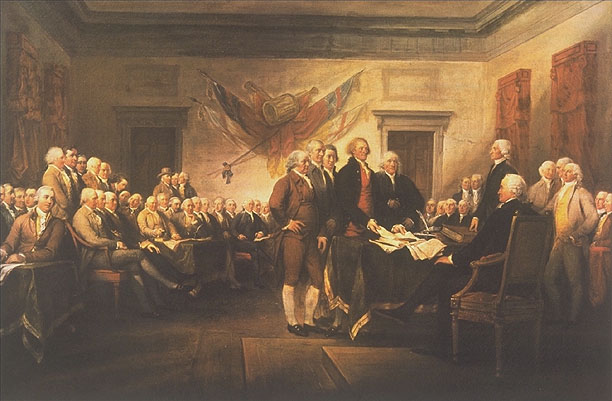 We held these truths to be self evident on July 4, 1776, but ironically we are still exploring what these truths might mean in 2011, 235 years later. Life, liberty and the pursuit of happiness. The story of American Law has been the story of this quest and it shows no sign of completion. It is the story of the individual vs. the state, the many vs. the few; the powerful vs. the powerless. The outcome may seem self-evident in hindsight, but it is never so while the struggle is joined.
The battlegrounds in 2011 include security in the age of terrorism; marriage and childrearing in an era when the traditional family is no longer the norm; privacy in a time when information is instantly available, to name a few. The outcome is neither foreordained or clear. As the world changes we come to see the unchanging foundation principles from new perspectives. We get lost, find the way and get lost again.
Lawyers and their clients are privileged to play a role in this Continuing American Revolution. And just as in 1776, History is watching.
Tags: arriage and childrearing > July 4 > liberty and the pursuit of happiness > Life > privacy > security in the age of terrorism
The Founding Fathers and Slavery.
Posted by Cliff Tuttle| June 30, 2011 | © 2026
No. 641
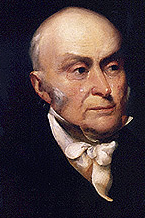
Our Sixth President - John Quincy Adams.
So, Michelle Bachman is being called a non-leader by some for making a statement that the Founding Fathers worked tirelessly to abolish slavery. When pressed about it, the only example that she could come up with was John Quincy Adams. Whereupon, she drew a certain measure of ridicule from members of the press who declared John Quincy not to be a Founding Father. These critics, Who were apparently all political and not historical writers, were willing to admit that JQA worked to abolish slavery.
The question whether JQA was a Founding Father is a matter of definition. He was, after all, only a teen-ager, but was undoubtedly present during the American Revolution. Perhaps he could have been better described as a founding son. Nevertheless, he was sufficiently educated and experienced to be appointed as Ambassador to the Netherlands by President George Washington. Perhaps serving in the Washington administration qualifies him as a founder. He was the last President of the generation that participated in the Revolution.
It might be more correct to say that some of the Founding Fathers opposed slavery and a few of them worked for its abolition. Their efforts helped create the famous deadlock and compromise in the Constitutional Convention that saw slave trade abolished in 1808, the year before the birth of Abraham Lincoln. It also saw 3/5 of slaves established for purposes of computing representation in the House of Representatives.
Perhaps, the most eminent opponent of slavery among the Founding Fathers was, yes, Benjamin Franklin. The Center for Legislative Archives, which has the Petition from the Pennsylvania Society for the Abolition of Slavery signed by Franklin in its collection, states:
It was after the ratification of the United States Constitution that he became an outspoken opponent of slavery. In 1789 he wrote and published several essays supporting the abolition of slavery and his last public act was to send to Congress a petition on behalf of the Society asking for the abolition of slavery and an end to the slave trade. The petition, signed on February 3, 1790, asked the first Congress, then meeting in New York City, to “devise means for removing the Inconsistency from the Character of the American People,” and to “promote mercy and justice toward this distressed Race.”
Then there was Alexander Hamilton. As James Oliver Horton wrote in The New York Journal of American History:
Although Hamilton did not live to see it, slavery’s demise in New York was to some extent his doing, having been motivated in part by the environment of his youth. He was one of those who refused to ignore the illogic, the irreligious, the hypocritical racial distinction that many of his friends and associates in Revolutionary America were willing to make. He publicly condemned Americans who demanded freedom for themselves as a God-given right, while depriving others of freedom and profiting from that deprivation.
Hamilton, along with another Founding Father, John Jay, was a leading member of the New York Society for the Manumission of Slaves.
CLT
Note: John Quincy Adams, Alexander Hamilton and John Jay were lawyers. Adams practiced law in Boston. Hamilton practiced law in New York. John Jay was the first Chief Justice of the United States. In addition to being great Americans, they are great lawyers.
Tags: Alexander Hamilton > Benjamin Franklin > Founding Fathers > John Jay > John Quincy Adams > Michelle Bachman
Welcome
CLIFF TUTTLE has been a Pennsylvania lawyer for over 45 years and (inter alia) is a real estate litigator and legal writer. The posts in this blog are intended to provide general information about legal topics of interest to lawyers and consumers with a Pittsburgh and Western Pennsylvania focus. However, this information does not constitute legal advice and there is no lawyer-client relationship created when you read this blog. You are encouraged to leave comments but be aware that posted comments can be read by others. If you wish to contact me in privacy, please use the Contact Form located immediately below this message. I will reply promptly and in strict confidence.
Recent Posts
- Sheriff Sales in the COVID-19 Era
- MORTGAGE FORECLOSURE: Cares Act creates gigantic opportunity for borrows under federally-backed and owned mortgages.
- PA Appellate Courts Schedule Arguments Using Electronic Media
- US Supreme Court holds that juries must render unanimous decisions in state criminal cases
- Signs of the Times — the future shortage of dentists.